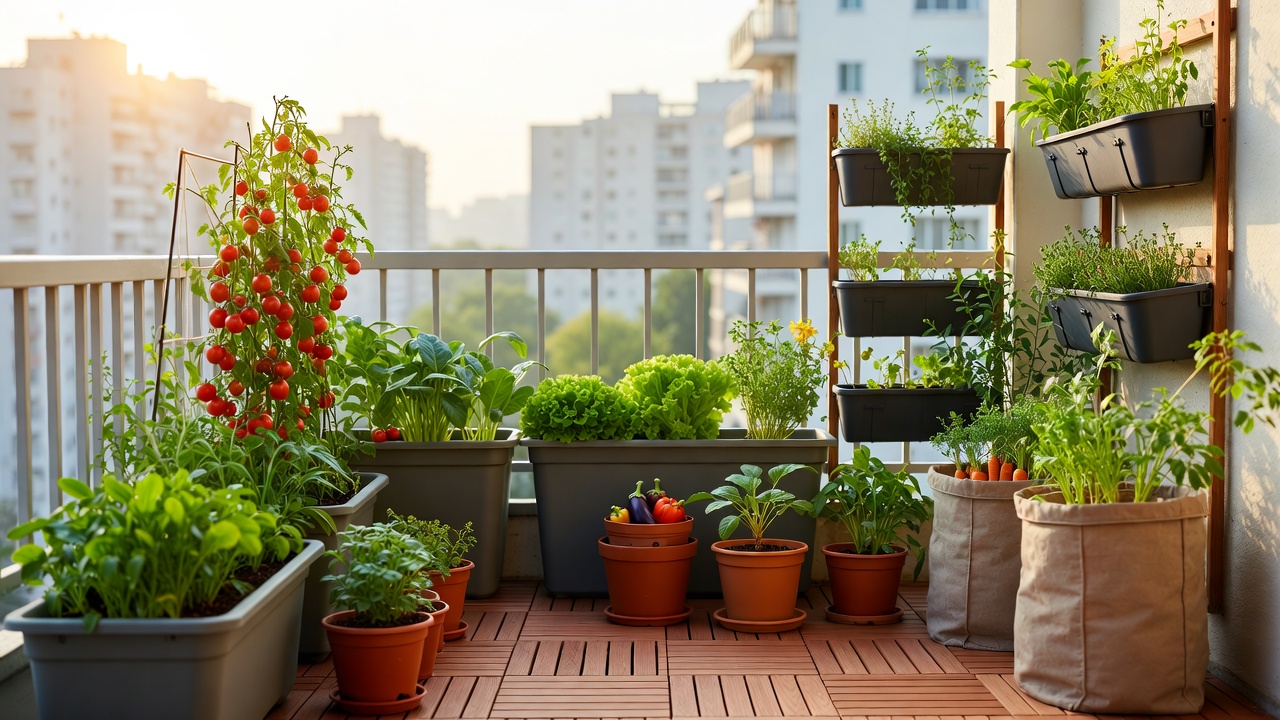
Urban living doesn’t mean you can’t grow your own food. If you have a balcony—even a tiny one—you can grow fresh, organic vegetables in containers with minimal space.
This guide covers the 15 best vegetables you can grow in a small balcony garden, including container size, sunlight needs, watering tips, and yield potential. Everything is beginner-friendly and optimized for small spaces.
Why Balcony Gardening Works
- Most vegetables don’t need deep soil.
- Containers allow full control over soil quality.
- Vertical growing maximizes limited space.
- Many crops thrive in pots and grow bags.
- You can harvest fresh food year-round in mild climates.
If your balcony gets 4–8 hours of sunlight, you can grow most of the vegetables listed below.
1. Tomatoes (Cherry & Dwarf Varieties)
Best for: High yield in small containers
Container size: 12–16 inches deep
Sunlight: 6–8 hours
Cherry tomatoes are ideal for balcony gardening because they grow vertically and produce continuously.
Tips:
- Use a stake or cage for support.
- Choose dwarf or determinate varieties.
- Water consistently to prevent cracking.
Why they’re perfect for balconies:
High production in limited space.
2. Lettuce
Best for: Fast harvest
Container size: 6–8 inches deep
Sunlight: 4–6 hours
Lettuce grows quickly and doesn’t need deep soil.
Tips:
- Harvest outer leaves continuously.
- Succession plant every 2–3 weeks.
- Grow in wide shallow trays.
Bonus: Ideal for beginners.
3. Spinach
Best for: Cool seasons
Container size: 6–8 inches
Sunlight: Partial sun
Spinach grows well in small pots and tolerates partial shade.
Tips:
- Keep soil moist.
- Harvest early to prevent bolting.
- Works great in vertical tier planters.
4. Radishes
Best for: Quick results (25–30 days)
Container size: 6 inches deep
Sunlight: 4–6 hours
Radishes are one of the fastest vegetables to grow.
Tips:
- Thin seedlings early.
- Avoid overcrowding.
- Great for beginner confidence.
5. Green Onions (Scallions)
Best for: Continuous harvest
Container size: 6 inches
Sunlight: 4–6 hours
Extremely low maintenance and regrow after cutting.
Tips:
- Can regrow from kitchen scraps.
- Harvest multiple times.
6. Peppers (Chili & Bell)
Best for: Compact plants
Container size: 10–12 inches
Sunlight: 6–8 hours
Peppers adapt well to pots and don’t require much space.
Tips:
- Use well-draining soil.
- Fertilize lightly during flowering.
- Avoid overwatering.
7. Carrots (Short Varieties)
Best for: Deep narrow containers
Container size: 10–12 inches deep
Sunlight: 6 hours
Choose short varieties like baby carrots.
Tips:
- Use loose soil.
- Don’t transplant (direct sow only).
- Thin properly.
8. Cucumbers (Bush Varieties)
Best for: Vertical growing
Container size: 12 inches
Sunlight: 6–8 hours
Use trellises to save space.
Tips:
- Choose compact bush types.
- Provide support early.
- Water consistently.
9. Zucchini (Compact Varieties)
Best for: Large containers
Container size: 15 gallons
Sunlight: Full sun
One plant can produce heavily.
Tips:
- Ensure good airflow.
- Hand-pollinate if needed.
- Harvest young.
10. Eggplant (Dwarf Varieties)
Best for: Warm climates
Container size: 12 inches
Sunlight: 6–8 hours
Compact eggplants thrive in pots.
Tips:
- Feed every 2–3 weeks.
- Stake for support.
11. Kale
Best for: Nutritious leafy greens
Container size: 8–10 inches
Sunlight: 4–6 hours
Tolerates cooler weather and partial shade.
Tips:
- Harvest outer leaves.
- Great for continuous picking.
12. Swiss Chard
Best for: Colorful balcony gardens
Container size: 8–10 inches
Sunlight: Partial to full sun
Very hardy and productive.
Tips:
- Cut-and-come-again harvesting.
- Heat tolerant.
13. Beans (Bush Type)
Best for: Small pots
Container size: 8–10 inches
Sunlight: 6–8 hours
Bush beans don’t require support.
Tips:
- Direct sow.
- Harvest frequently to increase yield.
14. Garlic
Best for: Low effort
Container size: 8 inches
Sunlight: 6 hours
Plant cloves directly in fall.
Tips:
- Use deep pots.
- Minimal maintenance needed.
15. Beets
Best for: Dual harvest (roots + leaves)
Container size: 8–10 inches
Sunlight: 6 hours
Leaves are edible too.
Tips:
- Thin seedlings.
- Harvest greens early.
How to Maximize a Small Balcony Garden
1. Use Vertical Space
- Wall planters
- Hanging pots
- Trellises
2. Choose the Right Containers
- Fabric grow bags
- Plastic pots with drainage
- Self-watering containers
3. Use Quality Potting Mix
Never use garden soil in containers.
Choose light, well-draining potting mix.
4. Ensure Proper Drainage
Drainage holes are mandatory.
5. Feed Regularly
Container plants need fertilizer every 2–4 weeks.
Best Layout Strategy for Tiny Balconies
- Place tall plants at the back.
- Medium-height plants in the center.
- Leafy greens in railing planters.
- Use corners for vertical supports.
Common Balcony Gardening Mistakes
- Overwatering
- Using wrong container size
- Poor sunlight evaluation
- No drainage
- Overcrowding plants
Avoid these and your success rate increases dramatically.
Frequently Asked Questions
What vegetables grow best in small balcony gardens?
Leafy greens, cherry tomatoes, peppers, radishes, and green onions perform best in containers.
How much sunlight do balcony vegetables need?
Most require 4–8 hours daily.
Can I grow vegetables in a north-facing balcony?
Yes, but focus on leafy greens and shade-tolerant plants.
What is the easiest vegetable for beginners?
Lettuce and radishes are the easiest.
Final Thoughts
You don’t need a backyard to grow fresh food. With smart container choices, vertical planning, and proper sunlight, your balcony can become a productive mini garden.
Start with 3–5 easy vegetables like lettuce, cherry tomatoes, and green onions. Expand gradually as you gain confidence.
Balcony gardening is not about space. It’s about strategy.