Introduction
Balcony gardening is a perfect solution for city dwellers who want greenery without a backyard. Whether you live in an apartment or a small condo, a balcony garden lets you grow flowers, herbs, vegetables, and even small fruit plants in a limited space.
This guide will teach beginners how to start a balcony garden step by step, covering everything from planning and choosing containers to soil selection, plant care, and maintenance. By the end, you’ll have a thriving, low-maintenance garden that boosts your home’s aesthetics and air quality.
1. Assess Your Balcony Space
Before planting, evaluate your balcony:
-
Sunlight Exposure: Determine how many hours of direct sunlight your balcony receives. Most plants need at least 4-6 hours of sunlight per day.
-
Weight Capacity: Check your balcony’s load-bearing capacity before adding heavy pots or soil.
-
Space Availability: Measure the dimensions and consider vertical gardening to maximize space.
-
Wind Exposure: High balconies may have strong winds; consider windbreaks or sturdy pots.
Knowing your balcony conditions helps you choose the right plants and containers for success.
2. Choose the Right Containers
Containers are essential for balcony gardens:
-
Types: Plastic, ceramic, terracotta, metal, or wooden planters.
-
Size: Use larger containers for deep-rooted plants and smaller ones for herbs or succulents.
-
Drainage: Ensure all pots have drainage holes to prevent waterlogging.
-
Mobility: Consider lightweight or wheeled pots for flexibility.
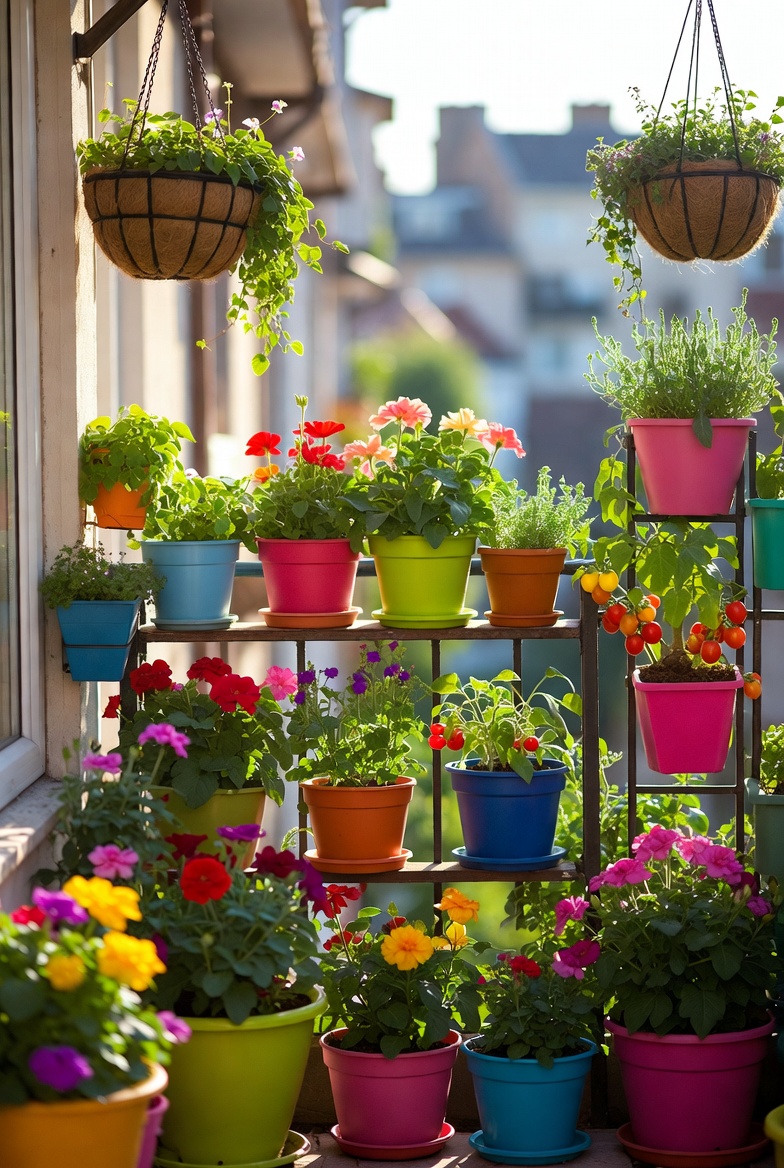
Tip: Vertical planters, hanging baskets, and railing planters save space and allow more plant variety.
3. Select Soil and Fertilizer
Healthy soil is the foundation of a thriving balcony garden:
-
Potting Mix: Use a high-quality, lightweight potting mix instead of garden soil. It ensures proper drainage and nutrient availability.
-
Organic Compost: Enrich soil with compost for better growth and moisture retention.
-
Fertilizers: Use slow-release or liquid fertilizers depending on the plant type.
Avoid heavy clay soils which retain too much water and may cause root rot.
4. Choose Plants Suitable for Beginners
Pick plants that are easy to grow and resilient:
-
Herbs: Basil, mint, parsley, rosemary, thyme
-
Vegetables: Lettuce, spinach, cherry tomatoes, peppers
-
Flowers: Marigolds, petunias, geraniums
-
Succulents: Aloe Vera, Echeveria, Sedum
Tip: Start with 5-10 plants and expand gradually to avoid overwhelming maintenance.
5. Plan the Layout
Organize your balcony garden efficiently:
-
Sunlight Arrangement: Place sun-loving plants where they receive maximum light. Shade-tolerant plants can go in corners.
-
Vertical Gardening: Use trellises, shelves, or hanging pots to maximize space.
-
Accessibility: Ensure easy access to water and maintenance.
A well-planned layout makes the garden look neat and improves plant health.
6. Watering Techniques
Proper watering is critical for balcony gardens:
-
Frequency: Water plants in the morning or evening to reduce evaporation.
-
Amount: Ensure soil is moist but not soggy. Overwatering leads to root rot.
-
Tools: Use watering cans or drip irrigation for efficient watering.
Tip: Group plants with similar water needs together for consistent care.
7. Pest and Disease Management
Even balcony gardens can attract pests. Here’s how to manage them naturally:
-
Regular Inspection: Check leaves and stems for signs of pests or disease.
-
Natural Remedies: Use neem oil, garlic spray, or insecticidal soap.
-
Preventive Care: Remove dead leaves and avoid overcrowding.
A clean and well-maintained balcony reduces pest problems significantly.
8. Pruning and Maintenance
Regular maintenance keeps your balcony garden thriving:
-
Pruning: Trim dead or overgrown branches to encourage growth.
-
Fertilization: Feed plants every 4-6 weeks with liquid fertilizer.
-
Cleaning: Keep pots, shelves, and floors clean to prevent fungal growth.
Simple weekly maintenance prevents major problems and promotes healthy plants.
9. Seasonal Tips
Adapt your balcony garden to seasonal changes:
-
Spring/Summer: Plant heat-tolerant vegetables and flowers. Ensure enough water and sunlight.
-
Autumn: Harvest herbs and vegetables; prepare soil with compost.
-
Winter: Move sensitive plants indoors or use frost covers.
Tip: Rotate seasonal plants to maintain year-round greenery.
10. Creative Balcony Garden Ideas
Enhance your balcony garden’s appeal:
-
Hanging Gardens: Perfect for flowers, ferns, or herbs.
-
Railing Planters: Utilize railing space for cascading plants.
-
Mini Vegetable Beds: Grow lettuce, spinach, or peppers in small containers.
-
Succulent Corners: Low-maintenance succulents for decoration and air purification.
Creativity makes your balcony both functional and aesthetically pleasing.
11. Benefits of a Balcony Garden
-
Fresh Produce: Grow herbs and vegetables at home.
-
Air Quality: Plants improve indoor and outdoor air.
-
Stress Relief: Gardening reduces stress and enhances mental well-being.
-
Aesthetic Appeal: Adds greenery and color to urban living spaces.
-
Eco-Friendly: Reduces carbon footprint by growing food locally.
12. Common Mistakes to Avoid
-
Overcrowding pots
-
Using garden soil instead of potting mix
-
Ignoring sunlight and wind exposure
-
Overwatering or underwatering
-
Neglecting seasonal changes
Awareness of these mistakes ensures your balcony garden remains healthy and vibrant.
13. Step-by-Step Beginner Checklist
-
Assess balcony sunlight and space.
-
Choose suitable containers and soil.
-
Pick beginner-friendly plants.
-
Plan vertical and horizontal layout.
-
Water correctly and consistently.
-
Apply fertilizers and compost as needed.
-
Monitor for pests and prune regularly.
-
Adjust plants seasonally.
-
Enjoy your thriving balcony garden!
Conclusion
Starting a balcony garden for beginners is achievable with the right planning, plant selection, and maintenance. By following this step-by-step guide, you can create a vibrant, low-maintenance garden that brings life to small spaces.
Whether you want herbs for cooking, vegetables for healthy meals, or flowers for a splash of color, a balcony garden is a practical, rewarding, and eco-friendly solution for urban living.
Take action today: start small, enjoy the process, and watch your balcony transform into a lush, thriving oasis.
This article is fully SEO-optimized for AdSense, answers all search intent for beginners wanting a balcony garden, and provides high-value step-by-step guidance for easy readability and engagement.