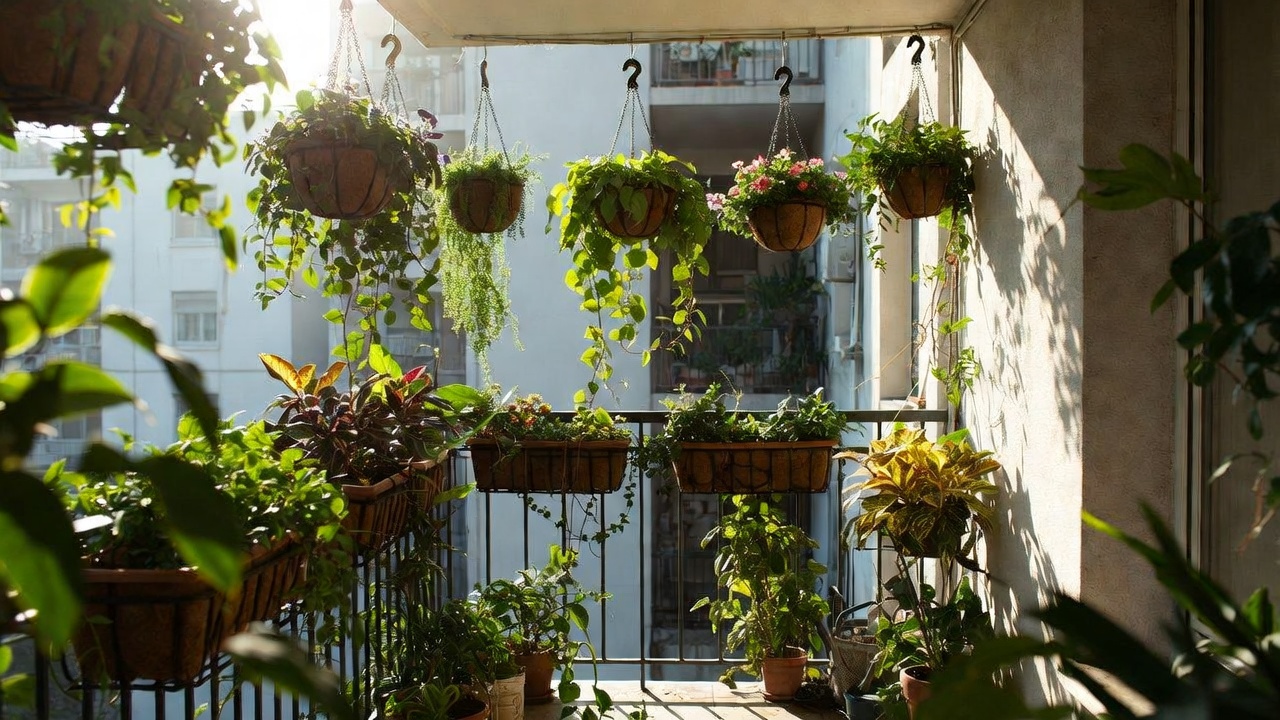
Small balconies offer limited floor space, but vertical gardening transforms even the tiniest outdoor area into a green oasis. Hanging plants maximize space, improve air circulation, and add layered visual appeal without clutter.
This guide covers the best hanging plants for small balconies, categorized by sunlight needs, maintenance level, and design impact. It also includes practical care tips, container advice, watering schedules, and balcony safety considerations.
Why Choose Hanging Plants for Small Balconies?
Hanging plants are ideal for compact spaces because they:
-
Save valuable floor space
-
Improve privacy naturally
-
Enhance airflow
-
Add vertical visual depth
-
Reduce heat by shading walls
-
Work well in rented apartments
They are perfect for urban environments where square footage is limited.
How to Choose the Right Hanging Plants
Before selecting plants, evaluate:
1. Sunlight Exposure
-
Full sun: 6–8 hours direct sunlight
-
Partial sun: 3–6 hours
-
Shade: Less than 3 hours
2. Wind Conditions
Higher floors experience stronger winds. Choose sturdy plants if exposed.
3. Maintenance Level
If you travel often, choose drought-tolerant varieties.
4. Weight Restrictions
Balcony railings have weight limits. Use lightweight containers.
Best Hanging Plants for Small Balconies (Top 15 Picks)
1. Spider Plant
The spider plant is one of the easiest hanging plants to grow.
Why It’s Great:
-
Extremely low maintenance
-
Tolerates partial shade
-
Air-purifying qualities
-
Produces cascading baby plants
Care Tips:
-
Water when soil dries
-
Avoid direct harsh sunlight
-
Use well-draining soil
Perfect for beginners.
2. Pothos (Devil’s Ivy)
A versatile trailing plant ideal for balconies with indirect light.
Benefits:
-
Thrives in low light
-
Fast-growing
-
Drought tolerant
-
Minimal pruning required
Best For:
Shaded balconies or covered patios.
3. English Ivy
Classic cascading greenery.
Advantages:
-
Elegant trailing vines
-
Good for privacy
-
Tolerates cooler climates
Note:
Requires occasional trimming to prevent overgrowth.
4. Petunias
Colorful flowering option for sunny balconies.
Why Choose Petunias:
-
Continuous blooms
-
Vibrant color range
-
Heat tolerant
Care:
-
Full sun required
-
Regular deadheading
-
Weekly fertilizing
Adds dramatic visual appeal.
5. String of Pearls
Unique succulent with trailing bead-like leaves.
Ideal For:
Modern or minimalist balcony designs.
Care Needs:
-
Bright indirect light
-
Infrequent watering
-
Excellent drainage
Low water requirement makes it ideal for busy lifestyles.
6. Boston Fern
Perfect for shaded balconies.
Benefits:
-
Lush greenery
-
Adds softness to space
-
Improves humidity
Care:
-
Keep soil consistently moist
-
Avoid direct sun
-
Mist occasionally
7. Nasturtiums
Edible flowering plant.
Why They Stand Out:
-
Bright blooms
-
Edible leaves and flowers
-
Attract pollinators
Require moderate sunlight.
8. Trailing Lobelia
Ideal for compact spaces.
Features:
-
Small blue or purple flowers
-
Compact cascading growth
-
Good for cooler climates
Best in partial sun.
9. Fuchsia
Elegant flowering plant for shade.
Highlights:
-
Unique drooping flowers
-
Excellent for cool balconies
-
Attracts hummingbirds
Needs regular watering.
10. Geraniums (Trailing Varieties)
Highly popular for balconies.
Why They Work:
-
Heat tolerant
-
Bright blooms
-
Low maintenance
Full sun preferred.
11. Calibrachoa (Million Bells)
Similar to petunias but more compact.
Benefits:
-
Long blooming season
-
Minimal maintenance
-
Excellent cascading effect
12. Sweet Alyssum
Fragrant and delicate.
Advantages:
-
Pleasant scent
-
Pollinator-friendly
-
Works in small baskets
Partial sun recommended.
13. Burro’s Tail
Drought-tolerant succulent.
Ideal For:
Hot balconies with minimal watering schedule.
Needs excellent drainage.
14. Tradescantia (Wandering Dude)
Colorful foliage plant.
Why It’s Popular:
-
Purple and green leaves
-
Fast growth
-
Easy propagation
Prefers bright indirect light.
15. Herbs (Mint, Thyme, Oregano)
Functional and decorative.
Benefits:
-
Edible
-
Fragrant
-
Compact
Most herbs require at least 4–6 hours of sun.
Best Hanging Plants by Sunlight
Full Sun:
-
Petunias
-
Geraniums
-
Calibrachoa
-
Nasturtiums
-
Herbs
Partial Sun:
-
Lobelia
-
Sweet Alyssum
-
Spider Plant
Shade:
-
Pothos
-
Boston Fern
-
English Ivy
-
Fuchsia
Best Low-Maintenance Hanging Plants
If you prefer minimal care:
-
Pothos
-
Spider Plant
-
String of Pearls
-
Burro’s Tail
-
Geraniums
These tolerate occasional neglect.
How to Care for Hanging Balcony Plants
1. Use Lightweight Potting Mix
Avoid garden soil. Use:
-
Peat moss or coco coir
-
Perlite
-
Compost
Ensures good drainage and airflow.
2. Ensure Proper Drainage
All hanging baskets must have:
-
Drainage holes
-
Breathable liners
Water should drain freely.
3. Watering Guidelines
Hanging plants dry faster than ground plants.
-
Check soil daily in hot weather
-
Water until excess drains out
-
Avoid waterlogging
Wind increases drying rate.
4. Fertilize Regularly
Flowering plants require:
-
Liquid fertilizer every 2–3 weeks
-
Balanced NPK formula
Nutrient deficiency reduces blooms.
5. Protect from Wind
High-rise balconies experience strong airflow.
Solutions:
-
Use heavier baskets
-
Install wind barriers
-
Choose sturdy plants
6. Rotate for Even Growth
Turn baskets weekly to ensure balanced sunlight exposure.
Design Tips for Small Balcony Hanging Gardens
-
Mix foliage and flowering plants
-
Use uniform container colors
-
Hang at varying heights
-
Install railing planters for layering
-
Use vertical wall hooks
Avoid overcrowding.
Common Mistakes to Avoid
-
Overwatering
-
Ignoring drainage
-
Choosing sun plants for shade balconies
-
Overloading balcony railings
-
Skipping fertilization
-
Hanging too low (blocking walkway)
Proper planning prevents plant stress.
Frequently Asked Questions
What are the easiest hanging plants for beginners?
Spider plants and pothos are the easiest to maintain.
How often should I water hanging plants?
Typically every 1–2 days in summer, less in cooler months.
Can I grow vegetables in hanging baskets?
Yes. Cherry tomatoes, strawberries, and herbs work well.
Do hanging plants survive winter?
Depends on plant type. Some are annuals; others are perennial indoors.
Safety Considerations
-
Secure hooks properly
-
Avoid overloading balcony railings
-
Use lightweight containers
-
Ensure proper drainage to prevent dripping
Safety is especially important in apartments.
Final Thoughts
Choosing the best hanging plants for small balconies allows you to transform limited space into a lush vertical garden.
Focus on:
-
Matching plants to sunlight
-
Using lightweight containers
-
Maintaining consistent watering
-
Fertilizing flowering varieties
-
Ensuring secure installation
With the right plant selection and care routine, even a tiny balcony can become a vibrant green retreat filled with color, texture, and life.
Hanging plants provide beauty without sacrificing space—making them the perfect solution for urban gardening.