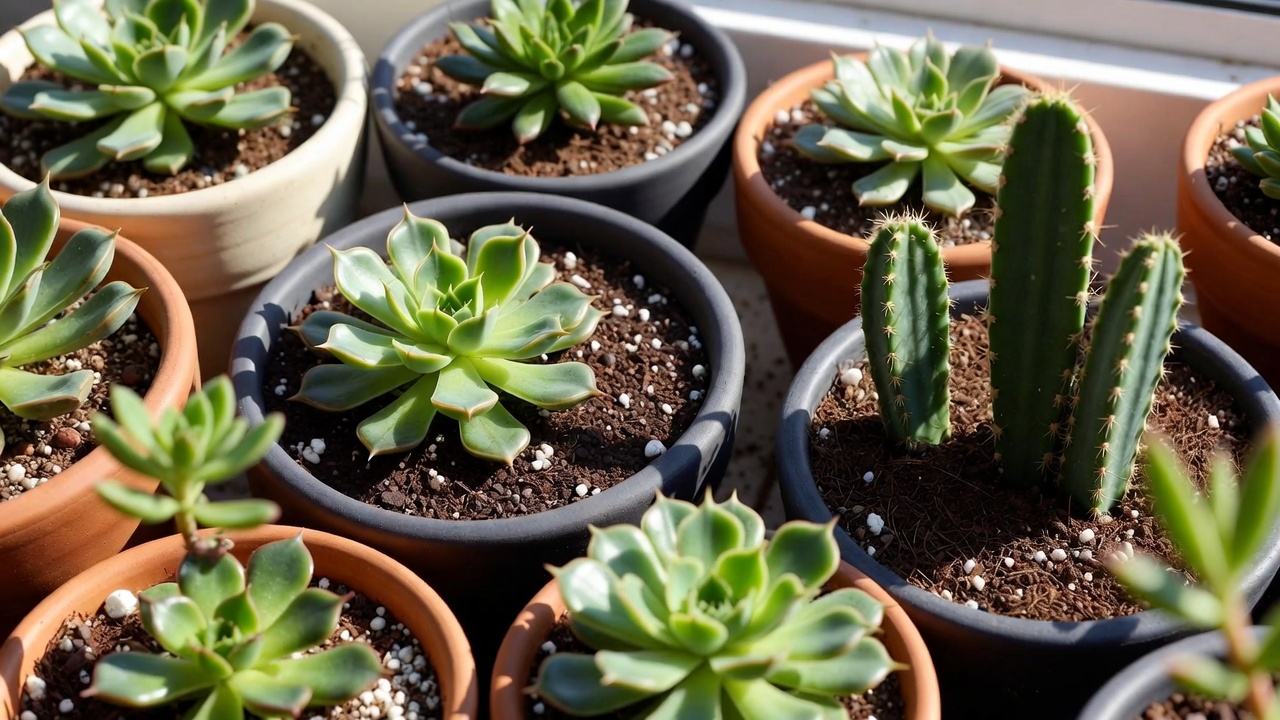
Succulents and cacti are popular for their low-maintenance care and striking appearance. However, one of the most critical factors for their success is soil quality. Using the wrong soil can lead to overwatering, root rot, and stunted growth.
This guide covers everything you need to know about soil for succulents and cactus, including types of soil, drainage techniques, DIY mixes, and care strategies to help your plants thrive.
Step 1: Understanding Succulent and Cactus Soil Needs
Succulents and cacti are adapted to arid climates, so their soil must mimic desert-like conditions:
- Fast-draining soil: Prevents waterlogged roots.
- Low organic matter: Avoids excessive moisture retention.
- Aerated structure: Roots need oxygen to prevent rot.
- Slightly acidic to neutral pH: Ideal range is 6.0–7.0.
Step 2: Common Soil Types for Succulents and Cacti
1. Commercial Cactus/Succulent Mix
- Pre-formulated for drainage and nutrient balance.
- Usually contains sand, perlite, and small amounts of organic matter.
- Convenient and safe for beginners.
2. Sandy Soil
- Excellent drainage, mimics natural desert soil.
- Can dry too quickly, so may need slight amendments with organic material.
3. Loamy Soil (Modified)
- Balanced texture with sand, silt, and clay.
- Should be amended with perlite or pumice to improve drainage.
4. Potting Soil (Modified)
- Typical potting soil retains too much moisture.
- Mix with coarse sand or perlite (50:50 ratio) to prevent root rot.
Step 3: DIY Soil Mix for Succulents and Cactus
Creating your own mix allows control over drainage and nutrients:
Basic DIY Recipe:
- 2 parts coarse sand
- 2 parts potting soil
- 1 part perlite or pumice
Optional Additions:
- Small gravel for top dressing (prevents erosion)
- Activated charcoal to improve aeration and reduce odor
Tips:
- Avoid garden soil; it’s too dense and retains water.
- Ensure all ingredients are sterilized to prevent pests or disease.
Step 4: Container and Drainage Considerations
- Use pots with drainage holes to prevent water accumulation.
- Avoid deep pots for shallow-rooted succulents; wider, shallow containers work best.
- Add a layer of gravel or small stones at the bottom to improve drainage.
- Self-watering containers are not ideal; succulents prefer controlled water access.
Step 5: Watering and Soil Interaction
- Water only when the top 2–3 inches of soil are dry.
- Well-draining soil prevents overwatering and root rot.
- During winter dormancy, reduce watering significantly.
- Mulch lightly with gravel to reduce evaporation without retaining excess moisture.
Step 6: Fertilization in Succulent Soil
- Succulents require low-nutrient soil.
- Use diluted succulent fertilizer during the growing season (spring and summer).
- Avoid over-fertilizing; high nutrients can cause weak, etiolated growth.
- Slow-release fertilizers can be mixed into soil for minimal maintenance.
Step 7: Repotting Tips
- Repot every 2–3 years or when roots outgrow the pot.
- Choose a fresh, well-draining mix during repotting.
- Handle roots gently; succulents and cacti are sensitive to damage.
- Allow newly repotted plants to rest before watering for 3–5 days.
Step 8: Preventing Common Soil-Related Problems
- Root rot: Avoid soggy soil and poor drainage.
- Soil compaction: Use perlite, pumice, or coarse sand to maintain aeration.
- Nutrient deficiency: Use light, occasional fertilization.
- Salt buildup: Flush soil with water periodically to prevent accumulation.
Step 9: Seasonal Care for Soil
- Summer: Ensure soil dries completely between waterings.
- Winter: Keep soil mostly dry, especially for dormant species.
- Rainy season: Protect outdoor succulents from excess water by moving pots under shelter or adding a temporary top layer of gravel.
Step 10: Advanced Soil Enhancements
- Pumice or lava rock: Improves aeration and drainage.
- Coconut coir: Retains minimal moisture, lighter than peat.
- Coarse sand vs fine sand: Use coarse sand for drainage; fine sand can compact.
- Worm castings: Add sparingly for nutrients without retaining excess water.
Step 11: Choosing Soil for Specific Succulent Types
1. Cacti
- Prefer extremely well-draining, mineral-rich soil.
- Minimal organic matter.
2. Aloe and Agave
- Require sandy, porous soil to prevent rot.
3. Echeveria and Sedum
- Slightly more tolerant of organic matter but still require excellent drainage.
4. Lithops / Living Stones
- Mimic natural sandy desert soil; extremely fast-draining mix.
Step 12: Indoor vs Outdoor Soil Considerations
- Indoor succulents: Use light, airy mix to prevent overwatering from indoor humidity.
- Outdoor succulents: Add gravel mulch to protect soil from heavy rain and reduce evaporation.
- Consider temperature fluctuations and sun exposure when choosing soil components.
Step 13: Frequently Asked Questions
Q1: Can I use regular potting soil for succulents?
- Only if modified with sand or perlite to improve drainage.
Q2: How often should I repot succulents?
- Every 2–3 years or when roots outgrow the pot.
Q3: Is gravel mulch necessary?
- Not necessary but helps prevent soil erosion and retains aeration.
Q4: Should succulents be fertilized regularly?
- Minimal fertilization is best; over-fertilizing weakens growth.
Q5: Can succulents survive in clay soil?
- Clay soil must be heavily amended with sand, pumice, and perlite for survival.
Step 14: Final Thoughts
Choosing the right soil for succulents and cactus is critical for healthy growth:
- Use well-draining, mineral-rich, low-organic soil.
- Consider DIY mixes for precise control over drainage and aeration.
- Use appropriate containers and watering strategies to prevent root rot.
- Apply minimal fertilizer and mulch lightly to conserve soil structure.
With these techniques, succulents and cactus can thrive indoors or outdoors, creating low-maintenance, resilient, and visually stunning gardens.