If you’re searching for how to turn a tiny balcony into a productive garden, your intent is clear:
- You have limited space.
- You want to grow real food (not just decorative plants).
- You need practical, step-by-step instructions.
- You want affordable and beginner-friendly solutions.
- You may want this for sustainability, saving money, or healthier eating.
This guide answers all of that — in detail, without fluff.
Why Start a Balcony Garden?
Before we get tactical, here’s why this matters:
- Lower grocery bills
- Fresh, pesticide-controlled produce
- Better mental health
- Sustainable lifestyle
- Increased property appeal
Even a 1–2 square meter balcony can produce:
- Herbs for daily cooking
- Salad greens weekly
- Tomatoes and peppers seasonally
- Strawberries or small fruits
You do not need a backyard.
Step 1: Evaluate Your Balcony Conditions
Before buying anything, assess:
1. Sunlight (Most Important)
Track sunlight for 2–3 days:
- 6–8 hours direct sun → Full-sun crops (tomatoes, peppers)
- 4–6 hours → Leafy greens, herbs
- 2–4 hours → Shade-tolerant plants (mint, spinach)
South-facing balconies (in Northern Hemisphere) get strongest light.
If light is limited:
- Use reflective white walls
- Add mirrors strategically
- Consider grow lights (if allowed)
2. Weight Limits
Balconies have weight restrictions.
- Wet soil is heavy.
- Large ceramic pots add weight.
- Water storage containers add more.
Use:
- Plastic containers
- Fabric grow bags
- Lightweight potting mix
Avoid:
- Solid concrete planters
3. Wind Exposure
High-rise balconies = strong wind.
Wind can:
- Snap stems
- Dry soil quickly
- Knock over pots
Solutions:
- Install windbreak mesh
- Use heavier base pots
- Group plants together
- Use railing planters with secure locking
Step 2: Choose the Right Crops for Maximum Productivity
Productivity = yield per square meter.
Avoid:
- Pumpkins
- Corn
- Large melons
Focus on high-return crops.
Best Crops for Tiny Balcony Gardens
Fast-Growing Crops
- Lettuce
- Spinach
- Arugula
- Radishes
High-Yield Crops
- Cherry tomatoes
- Chili peppers
- Green beans (vertical)
- Zucchini (compact varieties)
Continuous Harvest Crops
- Basil
- Mint
- Parsley
- Thyme
- Green onions
Compact Fruit Options
- Strawberries
- Dwarf lemon tree (if sun allows)
Step 3: Use Vertical Space (Critical for Small Balconies)
To turn a tiny balcony into a productive garden, vertical gardening is mandatory.
Vertical Strategies:
1. Wall Planters
Attach lightweight planters to walls.
Best for:
- Herbs
- Lettuce
- Strawberries
2. Railing Planters
Use balcony railings.
Ideal for:
- Basil
- Petunias (pollinator support)
- Cherry tomatoes
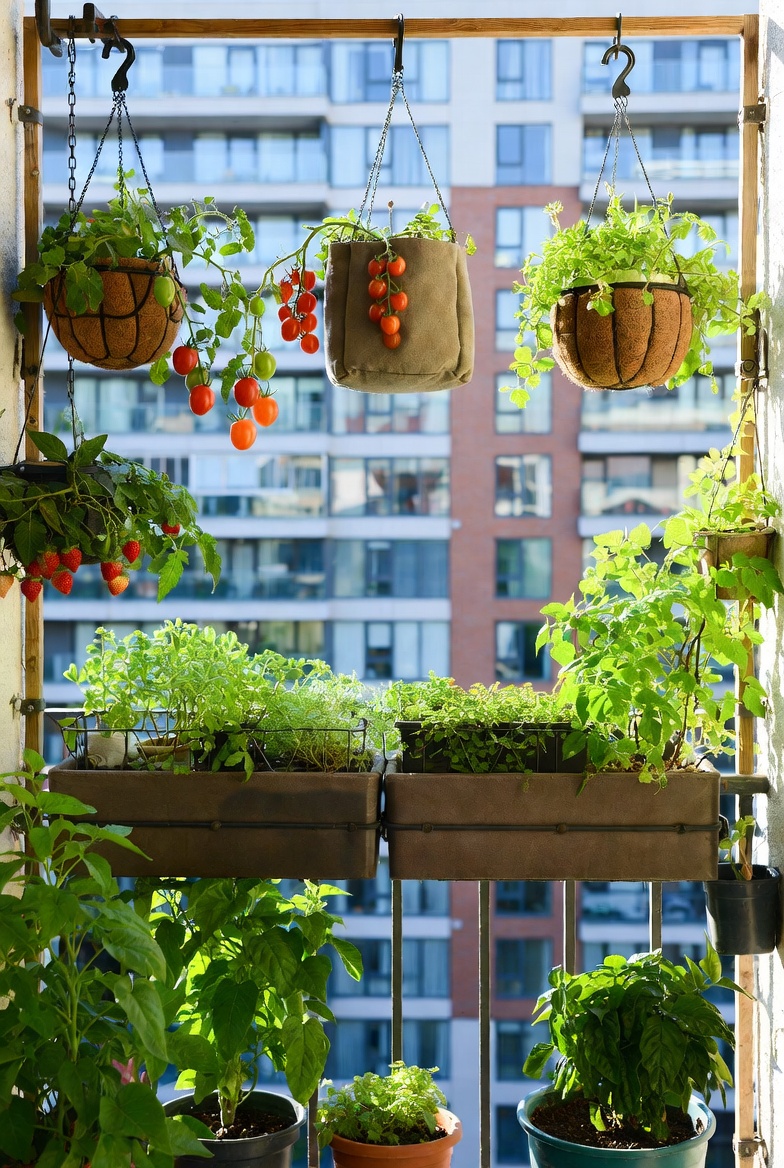
3. Hanging Pots
Hang from ceiling hooks.
Perfect for:
- Strawberries
- Trailing tomatoes
- Mint
4. Stackable Planters
Tiered systems increase space efficiency.
5. Trellis Systems
Grow vertically:
- Cucumbers
- Beans
- Peas
- Indeterminate tomatoes
This can triple your output in the same footprint.
Step 4: Use the Right Containers
Container choice affects productivity.
Best Container Types
Fabric Grow Bags
- Excellent drainage
- Lightweight
- Affordable
- Root aeration improves yield
Plastic Pots
- Lightweight
- Retain moisture
- Cheap
Self-Watering Containers
- Ideal for busy people
- Prevent overwatering
- Increase plant survival
Minimum Container Sizes
- Herbs → 6–8 inches deep
- Lettuce → 6 inches
- Tomatoes → 12–18 inches deep
- Peppers → 10–12 inches
- Beans → 8–10 inches
Never overcrowd roots.
Step 5: Use High-Quality Potting Mix (Not Garden Soil)
Never use backyard soil in balcony containers.
Why?
- Poor drainage
- Compaction
- Disease risk
Use:
- Premium potting mix
- Add compost (20–30%)
- Add perlite for aeration
For higher yield:
- Mix slow-release organic fertilizer
Step 6: Smart Watering System
Balcony gardens dry out faster.
Watering Rules:
- Water deeply, not lightly
- Water in morning
- Check soil 2 inches deep
- Avoid soggy roots
Upgrade Option:
Drip irrigation kit (low cost, high ROI).
Benefits:
- Saves time
- Reduces water waste
- Consistent moisture = better yield
Step 7: Fertilizing for Continuous Harvest
Container plants need more nutrients.
Fertilizing Schedule
- Leafy greens → Nitrogen-rich fertilizer every 2 weeks
- Fruiting plants → Balanced fertilizer every 2 weeks
- Organic compost tea → Monthly boost
Signs of deficiency:
- Yellow leaves
- Small fruit
- Slow growth
Never over-fertilize.
Step 8: Crop Rotation (Even on a Balcony)
Yes, even tiny gardens need rotation.
Why?
- Prevent nutrient depletion
- Reduce pests
- Improve yield
Simple rotation:
- Leafy greens → Fruiting plants → Herbs
Change soil every 1–2 seasons if possible.
Step 9: Pest Control (Apartment-Friendly)
Common balcony pests:
- Aphids
- Spider mites
- Whiteflies
Natural Solutions
- Neem oil spray
- Soapy water spray
- Introduce ladybugs (if practical)
- Remove infected leaves immediately
Avoid chemical pesticides (especially near living spaces).
Step 10: Pollination for Better Yields
If your balcony is high above ground:
- Pollinators may be limited.
- Tomato and pepper flowers may need help.
Manual pollination:
- Shake plant gently
- Use small paintbrush to transfer pollen
This increases fruit production significantly.
Example Balcony Garden Layout (1.5 x 1 meter)
Back Wall:
- Trellis with beans or cucumbers
Railing:
- 3 railing planters (herbs)
Floor:
- 2 tomato grow bags
- 1 pepper container
- 1 lettuce tier planter
Hanging:
- 2 strawberry baskets
Output Potential:
- Weekly salad
- Daily herbs
- Seasonal tomatoes & peppers
Estimated Budget (Affordable Setup)
- Grow bags (5) → $25
- Potting mix → $20
- Seeds → $10
- Fertilizer → $15
- Trellis → $20
Total: ~$90 initial investment
ROI:
- Fresh produce savings within 2–3 months.
Common Mistakes to Avoid
- Overwatering
- Using heavy garden soil
- Choosing large crops
- Ignoring sunlight patterns
- Not fertilizing
- No vertical growth system
Avoid these and productivity increases dramatically.
Advanced Productivity Hacks
For serious growers:
1. Succession Planting
Plant new seeds every 2 weeks for continuous harvest.
2. Companion Planting
- Basil near tomatoes
- Marigolds to deter pests
3. Microgreens
High profit per square inch.
Harvest in 7–14 days.
4. Grow Indoors in Winter
Move small pots inside with grow lights.
Seasonal Planting Strategy
Spring:
- Lettuce, spinach, radish
Summer:
- Tomatoes, peppers, beans
Autumn:
- Kale, arugula, herbs
Winter (mild climates):
- Garlic, onions, leafy greens
Plan for year-round production if climate allows.
Is Balcony Gardening Worth It?
Yes — if:
- You choose high-yield crops.
- You go vertical.
- You fertilize correctly.
- You manage water properly.
Even small balconies can produce 20–30 kg of produce annually with smart planning.
FAQ – Search Intent Coverage
Can I grow vegetables on a very small balcony?
Yes. Focus on vertical growth and compact crops like cherry tomatoes, lettuce, and herbs.
How much sunlight do I need?
Minimum 4–6 hours for most vegetables. Herbs tolerate less.
Do I need special soil?
Yes. Use high-quality potting mix, not garden soil.
What grows best on balconies?
Cherry tomatoes, peppers, lettuce, herbs, strawberries, and beans.
How do I maximize yield in small space?
- Vertical gardening
- Succession planting
- Fertilizing regularly
- Using compact high-yield varieties
Final Thoughts
If you follow this step-by-step system, you can turn even the smallest balcony into a productive garden that supplies:
- Fresh herbs daily
- Salad weekly
- Vegetables seasonally
You do not need land.
You need strategy.
Balcony gardening is not about space — it’s about smart design.
Start small.
Optimize vertically.
Feed your plants properly.
Harvest consistently.
And within months, your tiny balcony becomes a functional food system.