If you’re searching for Top 10 Easiest Organic Vegetables to Grow for First-Time Gardeners, your intent is clear:
- You are a beginner.
- You want low-maintenance vegetables.
- You want to grow organically (no chemicals).
- You want fast, visible results.
- You want to avoid failure.
This guide delivers exactly that — practical, beginner-safe, high-success vegetables with step-by-step organic growing tips.
No fluff. Just results.
What Makes a Vegetable “Easy” for Beginners?
Before listing the top 10, understand the criteria:
An easy organic vegetable must:
- Germinate quickly
- Tolerate beginner mistakes
- Resist common pests
- Grow in small spaces
- Require minimal fertilization
- Produce fast harvests
All vegetables below meet these conditions.
1. Lettuce (Fastest Beginner Win)
Why It’s Easy
- Germinates in 3–7 days
- Ready in 30–45 days
- Grows in containers
- Handles partial sun
Organic Growing Tips
- Use loose, well-draining soil
- Keep soil consistently moist
- Harvest outer leaves continuously
Best Varieties
- Leaf lettuce
- Romaine
- Butterhead
Common Mistake
Overwatering. Lettuce likes moisture but not soggy roots.
2. Radishes (Harvest in 3–4 Weeks)
Why It’s Easy
- Extremely fast growth
- Grows in small pots
- Rarely suffers serious pests
Organic Growing Tips
- Sow directly into soil
- Thin seedlings early
- Keep soil loose for straight roots
Bonus
Perfect for impatient beginners.
3. Green Beans (High Yield, Low Effort)
Why It’s Easy
- Naturally fixes nitrogen in soil
- Climbs vertically (great for small spaces)
- Produces heavy harvest
Organic Growing Tips
- Use a trellis for pole beans
- Full sun preferred
- Water deeply 2–3 times per week
Best Choice for Beginners
Bush beans (more compact).
4. Zucchini (Massive Productivity)
Why It’s Easy
- Produces large harvest from one plant
- Very forgiving
- Fast-growing
Organic Growing Tips
- Plant in nutrient-rich soil
- Give space (at least 2 feet apart)
- Harvest small for better taste
Warning
One plant can produce more than you expect.
5. Spinach (Cool Weather Champion)
Why It’s Easy
- Grows in spring and fall
- Tolerates shade
- Quick harvest (30–40 days)
Organic Growing Tips
- Keep soil moist
- Use mulch to cool roots
- Harvest outer leaves
Perfect for container gardening.
6. Cherry Tomatoes (Beginner-Friendly Variety)
Tomatoes intimidate beginners — but cherry varieties are easier.
Why It’s Easy
- More disease-resistant
- Heavy producer
- Grows in containers
Organic Growing Tips
- 6–8 hours sunlight minimum
- Use a cage or stake
- Fertilize every 2–3 weeks organically
Choose
Determinate cherry varieties for small spaces.
7. Carrots (Low Maintenance Root Crop)
Why It’s Easy
- Direct sow into soil
- Minimal care once sprouted
- Stores well after harvest
Organic Growing Tips
- Use deep loose soil
- Thin seedlings properly
- Avoid rocky soil
Harvest Time
60–75 days.
8. Kale (Nearly Indestructible)
Why It’s Easy
- Extremely hardy
- Survives cold weather
- Continuous harvesting
Organic Growing Tips
- Full sun to partial shade
- Remove yellow leaves
- Protect from caterpillars with netting
One plant lasts months.
9. Cucumbers (Climbing & Productive)
Why It’s Easy
- Fast-growing vines
- Heavy yield
- Great for vertical gardens
Organic Growing Tips
- Use trellis
- Water consistently
- Harvest regularly to encourage more growth
Space Saver Tip
Grow vertically on fences.
10. Green Onions (Almost Impossible to Fail)
Why It’s Easy
- Regrows from kitchen scraps
- Grows in shallow soil
- Minimal care needed
Organic Growing Tips
- Plant in rows or clusters
- Keep soil slightly moist
- Harvest tops regularly
Perfect for apartment balconies.
Quick Comparison Table
| Vegetable | Days to Harvest | Container Friendly | High Yield | Beginner Safe |
|---|---|---|---|---|
| Lettuce | 30–45 | Yes | Medium | Yes |
| Radish | 21–30 | Yes | Medium | Yes |
| Green Beans | 50–60 | Yes | High | Yes |
| Zucchini | 45–55 | Limited | Very High | Yes |
| Spinach | 30–40 | Yes | Medium | Yes |
| Cherry Tomato | 60–75 | Yes | High | Yes |
| Carrot | 60–75 | Yes | Medium | Yes |
| Kale | 50+ continuous | Yes | High | Yes |
| Cucumber | 50–70 | Yes (vertical) | High | Yes |
| Green Onion | 30–40 | Yes | Medium | Very Easy |
How to Grow Them Organically (Beginner System)
If you want organic results, follow these rules:
1. Use Organic Soil
Buy certified organic potting mix or enrich soil with compost.
2. Avoid Synthetic Fertilizers
Use:
- Compost
- Worm castings
- Fish emulsion
- Organic granular fertilizer
3. Natural Pest Control
- Neem oil spray
- Insecticidal soap
- Hand-pick pests
- Companion planting
4. Rotate Crops
Avoid planting same crop in same spot repeatedly.
Organic Gardening Starter Checklist
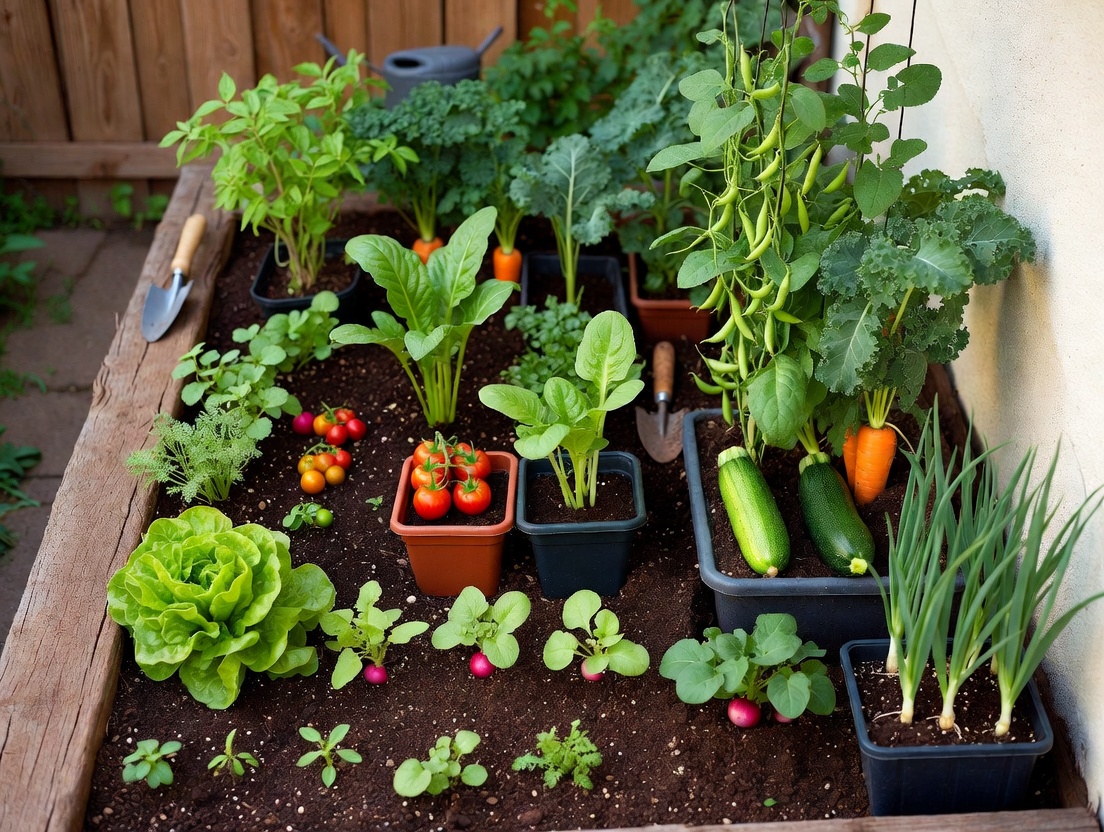
- Raised bed or containers
- Organic potting soil
- Compost
- Hand trowel
- Watering can
- Mulch
- Organic fertilizer
- Seeds (non-GMO, untreated)
When to Plant (Seasonal Guide)
Spring:
- Lettuce
- Radish
- Spinach
- Carrots
Late Spring:
- Beans
- Tomatoes
- Cucumbers
- Zucchini
Fall:
- Kale
- Spinach
- Lettuce
Common Beginner Mistakes (Avoid These)
- Overwatering
- Planting too close together
- Ignoring sunlight needs
- Using poor soil
- Harvesting too late
- Not thinning seedlings
Avoiding these increases success rate dramatically.
Container vs. Ground Growing
Containers
Best for:
- Small spaces
- Apartments
- Balconies
Pros:
- Better soil control
- Fewer weeds
- Portable
Ground Beds
Best for:
- Larger yields
- Zucchini
- Multiple rows
How Much Can You Expect to Harvest?
Small home garden (6–8 plants):
- Weekly salads
- Fresh herbs daily
- 5–10 kg tomatoes per season
- Continuous greens for months
Organic vegetables taste better and cost less long-term.
Cost Breakdown for Beginners
Estimated startup:
- Soil: $30–50
- Seeds: $10–20
- Containers: $40–60
- Tools: $30
Total: ~$100–150 initial investment.
Savings:
- Grocery reduction within 2–3 months.
FAQ – Search Intent Coverage
What is the easiest organic vegetable to grow?
Lettuce and radishes are the easiest for first-time gardeners.
Can beginners grow vegetables without chemicals?
Yes. Use compost, organic fertilizer, and natural pest control.
Which vegetable grows fastest?
Radishes (ready in 3–4 weeks).
What vegetables grow well in pots?
Lettuce, spinach, tomatoes, green onions, beans, carrots.
Do organic vegetables require more work?
No. In many cases, they require fewer chemical treatments.
Final Thoughts
If you’re starting your first organic garden, begin with:
- Lettuce
- Radish
- Green onions
- Spinach
Once confident, expand to:
- Tomatoes
- Beans
- Cucumbers
The key to success:
- Start small
- Use quality soil
- Water properly
- Harvest often
Growing organic vegetables is not complicated.
It is consistent, simple, and highly rewarding.
Start with one container.
Then expand.
And within months, you’ll never look at grocery vegetables the same way again.