Why Container Choice Matters in Balcony Gardening
Balcony gardens have limitations that ground gardens don’t face. Containers must solve several challenges:
- Limited space
- Weight restrictions
- Wind exposure
- Water drainage
- Sunlight variation
Choosing the wrong container can cause problems such as:
- Root rot from poor drainage
- Plants drying out too fast
- Balcony overload from heavy pots
- Poor root growth
The right containers maximize space, protect plants, and simplify maintenance.
Key Factors When Choosing Balcony Garden Containers
Before choosing a pot type, consider these essential factors.
1. Container Weight
Balconies often have weight limits. Heavy materials like stone or concrete may not be suitable.
Best lightweight materials:
- Plastic
- Fabric grow bags
- Resin pots
- Fiberglass containers
Lightweight containers are easier to move when adjusting sunlight exposure.
2. Drainage System
Drainage is the most important feature in any plant container.
Good balcony containers should have:
- Multiple drainage holes
- Slight elevation at the base
- A tray to collect excess water
Without proper drainage, soil becomes waterlogged, causing root rot and plant death.
3. Container Size
The container size must match the plant type.
Small plants need less root space, while vegetables need deep containers.
General rule:
- Herbs: 6–8 inches deep
- Leafy greens: 8–10 inches
- Tomatoes: 12–18 inches
- Root vegetables: 12+ inches
A container that is too small will restrict root development and reduce yield.
4. Sunlight and Heat Retention
Some materials retain heat more than others.
Examples:
- Plastic stays cooler
- Metal heats up quickly
- Terracotta breathes but dries fast
Balcony gardens exposed to strong sun benefit from light-colored containers to reduce heat buildup.
Best Types of Pots for Balcony Gardening
Different containers work better for different plants and balcony layouts.
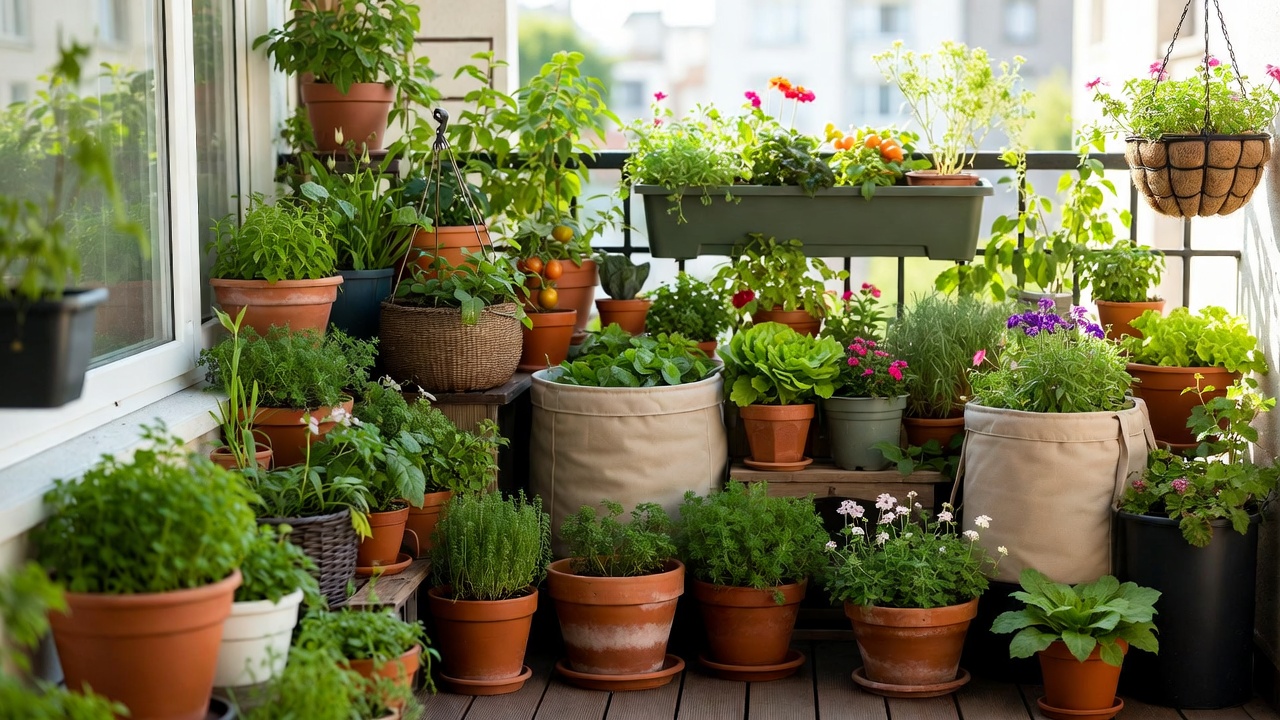
1. Plastic Pots
Plastic containers are one of the most popular choices for balcony gardeners.
Advantages:
- Lightweight
- Affordable
- Available in many sizes
- Retain moisture well
Disadvantages:
- Less breathable soil environment
- Can degrade under strong sunlight
Best for:
- Herbs
- Small vegetables
- Indoor/outdoor balcony gardens
Plastic pots are ideal for beginners because they are easy to move and inexpensive.
2. Terracotta Pots
Terracotta containers are made from natural clay and are widely used in traditional gardening.
Advantages:
- Excellent airflow for roots
- Natural look
- Prevents overwatering
Disadvantages:
- Heavy
- Breakable
- Soil dries quickly
Best for:
- Mediterranean herbs (thyme, rosemary, oregano)
- Succulents
- Cactus
Terracotta works best in dry climates and sunny balconies.
3. Fabric Grow Bags
Fabric grow bags are becoming increasingly popular in urban gardening.
Advantages:
- Lightweight
- Excellent drainage
- Air pruning improves root growth
- Easy storage
Disadvantages:
- Dry out faster
- Shorter lifespan
Best for:
- Tomatoes
- Potatoes
- Peppers
- Cucumbers
Grow bags are one of the most practical containers for balcony vegetable gardens.
4. Hanging Pots
Hanging containers maximize vertical space.
Advantages:
- Saves floor space
- Ideal for small balconies
- Decorative appearance
Disadvantages:
- Limited soil capacity
- Dry out quickly
Best plants for hanging pots:
- Strawberries
- Trailing herbs
- Petunias
- Cherry tomatoes
Using hanging containers allows you to multiply planting space without crowding the balcony floor.
5. Railing Planters
Railing planters attach directly to balcony railings.
Advantages:
- Excellent space efficiency
- Good sunlight exposure
- Decorative
Disadvantages:
- Weight limitations
- Wind exposure risk
Best plants for railing planters:
- Basil
- Mint
- Lettuce
- Flowers
They are perfect for ultra-small balconies.
6. Self-Watering Containers
Self-watering pots include a built-in water reservoir that provides consistent moisture.
Advantages:
- Reduces watering frequency
- Prevents underwatering
- Ideal for busy gardeners
Disadvantages:
- More expensive
- Requires monitoring
Best plants:
- Tomatoes
- Cucumbers
- Lettuce
- Herbs
Self-watering containers are excellent for people who travel frequently or forget to water plants.
7. Vertical Planters
Vertical gardening systems use stacked containers or wall-mounted planters.
Advantages:
- Maximizes space
- Ideal for tiny balconies
- Decorative
Disadvantages:
- Uneven watering
- Some plants receive less sunlight
Best plants:
- Herbs
- Lettuce
- Spinach
- Small flowers
Vertical systems allow you to grow dozens of plants in minimal space.
Best Containers for Growing Vegetables on a Balcony
Some vegetables perform better in containers than others.
Recommended combinations:
| Vegetable | Recommended Container |
|---|---|
| Tomatoes | 5–10 gallon grow bags |
| Peppers | 3–5 gallon pots |
| Lettuce | Wide shallow planters |
| Radishes | Medium depth containers |
| Cucumbers | Deep containers with trellis |
| Strawberries | Hanging baskets |
Vegetables need larger containers and nutrient-rich soil to grow successfully.
Best Containers for Balcony Herbs
Herbs are the easiest plants for balcony gardening.
Best containers:
- Small terracotta pots
- Window boxes
- Railing planters
- Vertical herb gardens
Herbs that grow well on balconies:
- Basil
- Mint
- Parsley
- Thyme
- Oregano
- Chives
Grouping herbs in one large container can create a compact herb garden.
Space-Saving Container Strategies
Balcony gardens must maximize every square meter.
Effective strategies include:
1. Stackable Pots
Stacking containers vertically saves floor space.
2. Multi-Pocket Fabric Planters
These planters hold several plants in one unit.
3. Corner Planters
Use unused balcony corners efficiently.
4. Tiered Plant Stands
Allow multiple pots in vertical layers.
Using these strategies can triple the number of plants on a small balcony.
Common Container Gardening Mistakes
Many balcony gardeners make simple mistakes that reduce plant health.
Avoid these errors:
Using Pots Without Drainage
Always choose containers with drainage holes.
Choosing Containers Too Small
Plants need space for roots to grow.
Ignoring Balcony Wind Conditions
Tall containers may tip over in strong wind.
Overcrowding Plants
Each plant requires enough soil and nutrients.
Avoiding these mistakes greatly improves plant survival and productivity.
Best Soil for Balcony Containers
Containers require specialized soil mixes.
Ideal container soil should be:
- Lightweight
- Well-draining
- Nutrient rich
Recommended mix:
- Potting soil
- Compost
- Perlite or coco coir
Never use regular garden soil, as it becomes compacted in pots.
Balcony Container Maintenance Tips
Proper maintenance keeps container plants healthy.
Important practices include:
Regular Watering
Containers dry faster than garden beds.
Fertilizing
Use liquid fertilizer every 2–3 weeks.
Pruning
Trim plants to encourage growth.
Rotating Pots
Rotate containers so plants receive equal sunlight.
These small actions significantly improve plant growth.
Budget-Friendly Balcony Containers
You don’t always need expensive pots.
Creative container ideas:
- Buckets
- Wooden crates
- Plastic storage bins
- Recycled bottles
- Old kitchen containers
Just ensure you add drainage holes.
DIY containers are excellent for low-cost balcony gardens.
Final Thoughts
Choosing the best pots and containers for balcony gardening can dramatically improve plant health, yield, and overall gardening success. The right container depends on several factors including plant type, balcony size, sunlight exposure, and weight limitations.
For most balcony gardeners, the best combination includes:
- Plastic pots for lightweight flexibility
- Fabric grow bags for vegetables
- Railing planters for herbs
- Hanging baskets for strawberries and flowers
- Vertical planters to maximize space
With the right containers and proper care, even a small balcony can become a productive and beautiful urban garden.