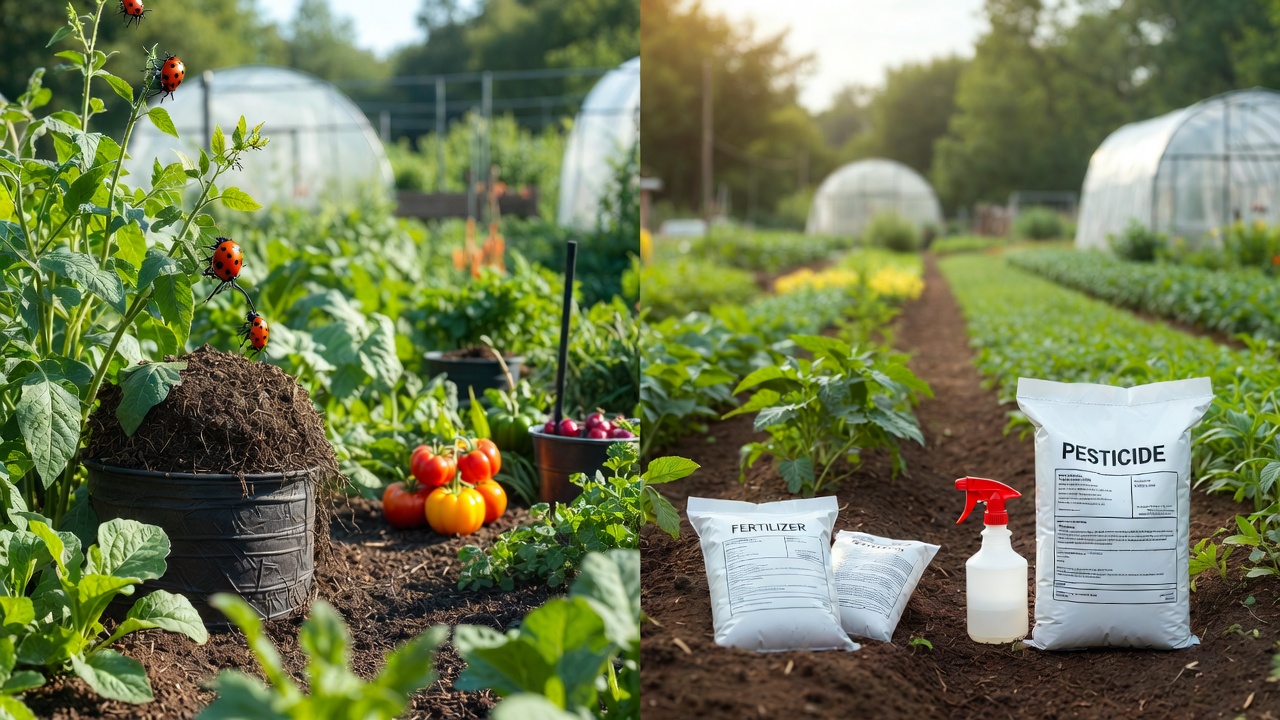
Gardening methods have evolved significantly over the past century. Today, two main approaches dominate modern gardening practices: organic gardening and conventional gardening. Both methods aim to grow healthy plants, fruits, vegetables, and flowers, but they rely on very different techniques and philosophies.
Understanding the real difference between organic and conventional gardening helps gardeners choose the best approach based on their goals, resources, and environmental concerns.
This guide explains the key differences between these two gardening methods, including soil health, fertilizers, pest control, costs, yields, and long-term sustainability.
What Is Organic Gardening?
Organic gardening is a natural approach to growing plants without synthetic chemicals such as artificial fertilizers, pesticides, or herbicides.
Instead, organic gardening focuses on:
- Natural soil improvement
- Compost and organic fertilizers
- Biological pest control
- Crop rotation
- Sustainable gardening practices
The main goal of organic gardening is to work with nature instead of controlling it with chemicals.
Organic gardeners aim to create a balanced ecosystem where soil, plants, insects, and microorganisms support each other naturally.
What Is Conventional Gardening?
Conventional gardening relies on synthetic fertilizers, chemical pesticides, and herbicides to increase plant growth and control pests quickly.
This method focuses on:
- Maximizing plant growth
- Increasing yields
- Faster plant development
- Efficient pest and weed control
Conventional gardening is widely used in commercial agriculture because it allows farmers to produce large quantities of crops quickly and consistently.
However, many home gardeners also use conventional methods because they are simple, fast, and widely available.
Core Philosophy Differences
The biggest difference between organic and conventional gardening lies in their approach to nature.
Organic Gardening Philosophy
Organic gardening focuses on:
- Natural soil fertility
- Ecosystem balance
- Long-term sustainability
- Environmental protection
The idea is that healthy soil leads to healthy plants.
Conventional Gardening Philosophy
Conventional gardening focuses on:
- Efficiency
- Fast results
- Maximizing crop yield
- Chemical pest and weed control
Instead of improving the ecosystem, conventional gardening often controls problems using chemical solutions.
Soil Health: The Foundation of Organic Gardening
Soil health is where the biggest difference between the two methods appears.
Organic Gardening Soil Practices
Organic gardeners treat soil as a living ecosystem full of microorganisms.
Common organic soil practices include:
- Composting
- Mulching
- Cover crops
- Natural fertilizers
- Crop rotation
Healthy soil contains:
- Beneficial bacteria
- Earthworms
- Organic matter
- Balanced nutrients
These elements help plants grow naturally strong and disease resistant.
Conventional Gardening Soil Practices
Conventional gardening relies heavily on synthetic fertilizers to provide nutrients.
Common chemical fertilizers include:
- Nitrogen fertilizers
- Phosphorus fertilizers
- Potassium fertilizers
While these fertilizers can boost plant growth quickly, they do not improve soil structure or biological life.
Over time, repeated chemical use can reduce soil fertility.
Fertilizers: Natural vs Synthetic
Fertilizer choice is one of the most visible differences between the two gardening methods.
Organic Fertilizers
Organic fertilizers come from natural sources such as:
- Compost
- Manure
- Bone meal
- Fish emulsion
- Seaweed extract
Benefits of organic fertilizers:
- Improve soil structure
- Release nutrients slowly
- Support microbial life
- Reduce nutrient runoff
Organic fertilizers provide long-term soil improvement.
Synthetic Fertilizers
Synthetic fertilizers are manufactured chemicals designed to deliver nutrients rapidly.
Advantages include:
- Fast plant growth
- Easy application
- Precise nutrient control
However, they can cause problems such as:
- Nutrient leaching
- Soil degradation
- Environmental pollution
Plants grow quickly but often depend on continuous fertilizer input.
Pest Control Methods
Pest control is another major difference between organic and conventional gardening.
Organic Pest Control
Organic gardeners use natural pest management techniques.
Examples include:
- Beneficial insects (ladybugs, lacewings)
- Neem oil
- Insecticidal soap
- Companion planting
- Physical barriers like nets
The goal is to manage pests without harming the ecosystem.
Organic methods focus on prevention rather than elimination.
Conventional Pest Control
Conventional gardening uses chemical pesticides to eliminate pests quickly.
These pesticides can:
- Kill insects rapidly
- Protect crops from major damage
- Reduce pest outbreaks
However, overuse can lead to:
- Pest resistance
- Harm to beneficial insects
- Environmental contamination
Chemical pest control offers speed and convenience, but it can disrupt natural ecosystems.
Weed Management
Weed control is another key difference.
Organic Weed Control
Organic gardeners manage weeds using:
- Mulching
- Hand weeding
- Ground covers
- Crop spacing
These methods take more effort but protect soil health.
Conventional Weed Control
Conventional gardening often relies on chemical herbicides to kill weeds.
Benefits:
- Fast weed removal
- Less manual labor
However, herbicides may affect:
- Soil organisms
- Nearby plants
- Water systems
Environmental Impact
Environmental impact is one of the biggest debates between the two methods.
Organic Gardening Environmental Benefits
Organic gardening supports environmental sustainability by:
- Reducing chemical pollution
- Protecting pollinators
- Improving soil health
- Conserving biodiversity
Organic systems often promote balanced ecosystems.
Conventional Gardening Environmental Concerns
Chemical fertilizers and pesticides may cause:
- Water contamination
- Soil degradation
- Harm to beneficial insects
- Reduced biodiversity
However, modern farming technologies are improving chemical efficiency and reducing waste.
Crop Yield Differences
Yield is often the main reason gardeners choose conventional methods.
Conventional Gardening Yields
Conventional gardening often produces:
- Faster plant growth
- Higher short-term yields
- More uniform crops
This is why conventional methods dominate large-scale agriculture.
Organic Gardening Yields
Organic gardening may produce:
- Slightly lower yields initially
- More nutrient-dense crops
- Better long-term soil productivity
Over time, organic gardens can become highly productive as soil health improves.
Cost Comparison
Cost is another factor when choosing a gardening method.
Organic Gardening Costs
Organic gardening may require:
- Compost materials
- Organic fertilizers
- Natural pest solutions
Initial setup can take more time and effort.
However, long-term costs may be lower because organic gardeners often recycle natural materials.
Conventional Gardening Costs
Conventional gardening requires:
- Chemical fertilizers
- Pesticides
- Herbicides
These products must be purchased regularly.
While convenient, long-term expenses may increase over time.
Taste and Nutritional Differences
Many people believe organic produce tastes better.
Possible reasons include:
- Slower plant growth
- Natural soil nutrients
- Higher antioxidant levels
However, scientific studies show mixed results. The difference in nutrition is often small but noticeable in some crops.
Taste differences may depend more on freshness and variety than farming method.
Which Gardening Method Is Better?
There is no universal answer because each method has advantages.
Choose organic gardening if you want:
- Chemical-free produce
- Environmental sustainability
- Healthy soil ecosystems
- Natural gardening practices
Choose conventional gardening if you want:
- Faster results
- Higher short-term yields
- Simpler pest control
- Less manual labor
Many gardeners combine both approaches using integrated gardening methods.
Hybrid Gardening: The Best of Both Worlds
Many modern gardeners practice integrated gardening, combining organic and conventional techniques.
Examples include:
- Using compost but adding minimal fertilizer
- Natural pest control with occasional chemical backup
- Organic soil management with targeted treatments
This balanced approach can provide:
- Good yields
- Healthy soil
- Reduced chemical use
Final Thoughts
The debate between organic gardening vs conventional gardening often focuses on environmental impact, food quality, and productivity.
Organic gardening prioritizes long-term soil health, sustainability, and natural ecosystems, while conventional gardening emphasizes efficiency, high yields, and fast results.
For most home gardeners, the best approach may be a balanced method that focuses on healthy soil, minimal chemicals, and sustainable gardening practices.
Understanding the strengths and weaknesses of both systems allows gardeners to make informed decisions and create productive gardens that match their personal goals.