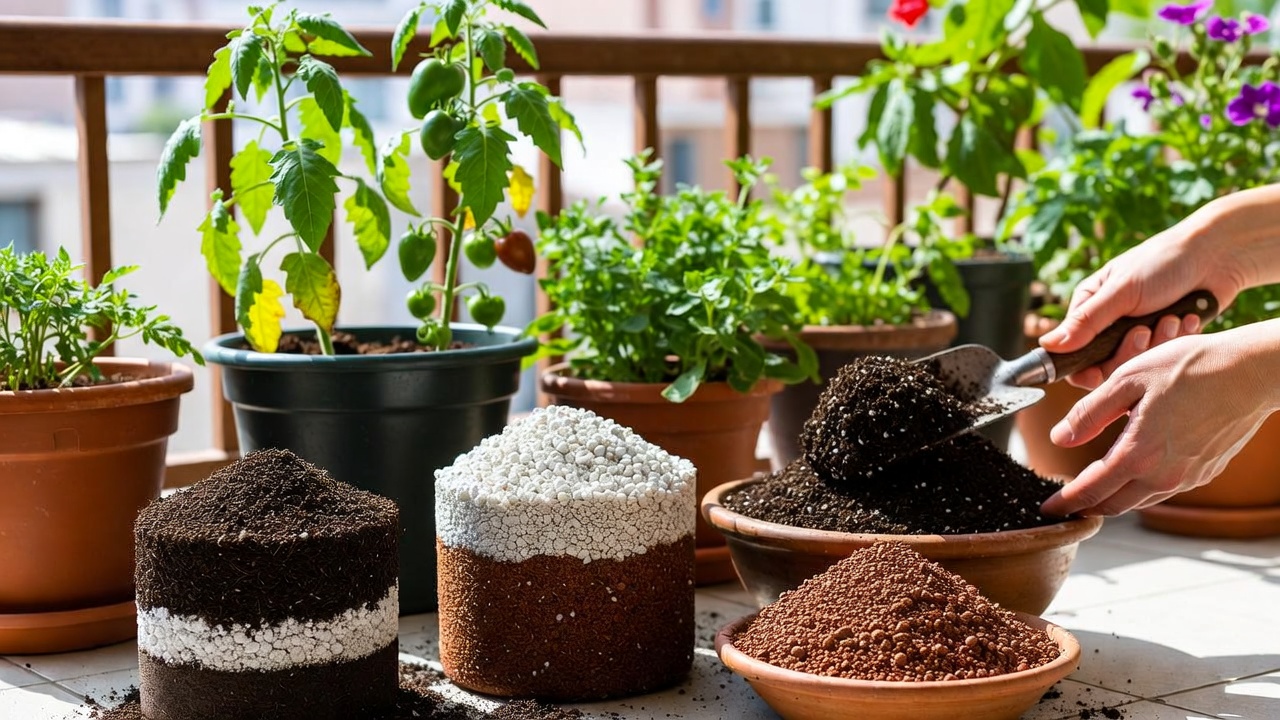
Container gardening is a convenient way to grow vegetables, herbs, flowers, and small shrubs in limited spaces like balconies, patios, or small yards. However, the soil mix you choose is critical—it directly affects plant growth, yield, and overall health.
This guide provides an in-depth, actionable roadmap on the best soil mix for container gardening, including components, DIY recipes, plant-specific considerations, and expert tips for thriving container plants.
Why Soil Mix Matters in Container Gardening
Plants in containers rely entirely on the soil for:
-
Nutrient supply
-
Water retention
-
Oxygenation for roots
-
Stability for the plant structure
Unlike garden beds, container soil cannot naturally replenish nutrients, making a well-formulated soil mix essential.
Key Properties of Ideal Container Soil
A high-quality container soil mix should have:
-
Good Drainage – Prevents waterlogging and root rot
-
Aeration – Allows oxygen to reach roots
-
Moisture Retention – Keeps roots hydrated without soggy soil
-
Fertility – Provides essential nutrients for growth
-
pH Balance – Suitable for most plants (generally 6–7 for vegetables and flowers)
Common Mistakes in Container Gardening Soil
-
Using garden soil: Too dense, poor drainage, may carry pathogens
-
Over-reliance on compost alone: Can compact, leading to root suffocation
-
Ignoring pH: Some plants prefer slightly acidic or alkaline soil
-
Failing to amend soil over time: Nutrients deplete quickly in containers
Step 1: Understand Your Plant Needs
Different plants require slightly different soil mixes.
Leafy Vegetables (Lettuce, Spinach, Herbs)
-
Prefers light, nutrient-rich soil
-
High compost content for fertility
-
Well-draining mix to prevent soggy roots
Fruiting Plants (Tomatoes, Peppers, Eggplants)
-
Requires fertile, well-draining soil with good water retention
-
Add slow-release fertilizer or worm castings
-
Mix must support heavy fruit weight
Flowering Plants (Petunias, Geraniums, Marigolds)
-
Needs light, airy soil with balanced nutrients
-
Avoid overwatering-prone soil; flowers can rot in soggy conditions
Step 2: Essential Components of Container Soil
1. Base Material
-
Peat moss – Lightweight, retains water, slightly acidic
-
Coco coir – Sustainable alternative to peat, retains water well
-
Compost – Provides organic matter and nutrients
2. Drainage Amendments
-
Perlite – Improves aeration, prevents compaction
-
Vermiculite – Retains water and nutrients, lighter texture
-
Sand (horticultural) – Helps heavy soils drain faster
3. Fertility Boosters
-
Worm castings – Slow-release natural fertilizer
-
Composted manure – Adds nitrogen, improves soil texture
-
Bone meal or rock phosphate – Promotes root development and flowering
4. pH Adjusters (If Needed)
-
Lime – Raises pH (reduces acidity)
-
Sulfur – Lowers pH for acid-loving plants
Step 3: DIY Soil Mix Recipes
1. General Purpose Mix (Vegetables & Flowers)
-
40% peat moss or coco coir
-
30% compost
-
20% perlite or vermiculite
-
10% worm castings
Benefits: Well-draining, nutrient-rich, retains moisture, suitable for most container plants
2. Fruiting Plant Mix (Tomatoes, Peppers)
-
40% compost
-
30% coco coir or peat moss
-
20% perlite
-
10% slow-release fertilizer or worm castings
Benefits: Supports heavy fruiting, retains moisture, nutrient-dense
3. Succulent or Cactus Mix
-
50% coarse sand
-
30% potting soil or coco coir
-
20% perlite
Benefits: Extremely well-draining, prevents root rot
4. Herb Garden Mix
-
40% compost
-
30% coco coir
-
20% perlite
-
10% vermiculite
Benefits: Light, airy soil, retains just enough moisture, encourages aromatic herbs
Step 4: Layering Techniques in Container
-
Bottom Layer: Small stones or broken terracotta for drainage (optional)
-
Middle Layer: Main soil mix
-
Top Layer: Mulch or decorative stones to retain moisture
Tip: Avoid using gravel as the bottom layer in small pots; it may reduce drainage efficiency in shallow containers.
Step 5: Repotting and Soil Refresh
-
Refresh container soil annually for heavy feeders
-
Mix in fresh compost, perlite, and slow-release fertilizer
-
Check pH and adjust if needed
-
Remove dead roots and old debris
Step 6: Watering and Soil Moisture Management
-
Container soil dries faster than garden beds
-
Water thoroughly until drainage appears
-
Mulch surface to reduce evaporation
-
Monitor soil moisture with a finger test or moisture meter
Step 7: Fertilization in Container Soil
-
Mix slow-release fertilizer into soil at planting
-
Use liquid fertilizer every 2–3 weeks during growth
-
Avoid over-fertilizing, which can burn roots
-
Match fertilizer type to plant needs: NPK ratio for leafy, fruiting, or flowering plants
Step 8: Adjusting for Climate
Hot Climates
-
Add more perlite or vermiculite to prevent compaction
-
Mulch soil surface to keep roots cool
Humid or Rainy Climates
-
Ensure high drainage (more perlite, avoid compacted compost)
-
Monitor for fungal issues
Cold Climates
-
Use darker-colored pots to retain heat
-
Well-aerated soil to prevent waterlogging
Step 9: Container Choice and Soil Depth
-
Small pots (<6 inches): restrict root growth, require more frequent watering
-
Medium pots (6–12 inches): good for herbs and small vegetables
-
Large pots (>12 inches): ideal for tomatoes, peppers, or bushy flowering plants
-
Soil depth: At least 12 inches for most vegetables
Step 10: Common Mistakes to Avoid
-
Using plain garden soil
-
Overcompacting the soil
-
Ignoring drainage
-
Skipping fertilization
-
Reusing old soil without refreshing nutrients
Correct soil management prevents root rot, nutrient deficiencies, and poor plant growth.
Step 11: Frequently Asked Questions
What is the best soil for container vegetables?
-
A mix of 40% compost, 30% coco coir, 20% perlite, 10% worm castings
Can I use garden soil in pots?
-
Not recommended; too dense and may carry pathogens
How often should I refresh container soil?
-
Heavy feeders: annually
-
Moderate feeders: every 2–3 years
How do I improve drainage in container soil?
-
Mix in perlite, vermiculite, coarse sand
-
Ensure pots have drainage holes
Step 12: Advanced Tips for High-Yield Container Gardening
-
Rotate soil annually to avoid nutrient depletion
-
Top-dress with compost mid-season
-
Monitor soil pH and adjust for acid or alkaline-preferring plants
-
Use self-watering containers with proper soil mix to maintain moisture balance
Step 13: Sustainable Practices
-
Reuse organic matter like kitchen scraps as compost
-
Avoid peat overuse by substituting with coco coir
-
Choose biodegradable soil amendments when possible
Final Thoughts
The best soil mix for container gardening balances:
-
Drainage and aeration
-
Nutrient availability
-
Moisture retention
-
pH suitability
-
Plant-specific needs
A well-prepared soil mix ensures healthier roots, stronger plants, higher yields, and longer-lasting container gardens. Whether growing herbs, vegetables, or flowering plants, investing time in creating the right soil mix pays off in every season.