Indoor plants are an excellent way to bring life, color, and fresh air into your home. But not everyone has the time or experience to care for demanding plants. Luckily, there’s a wide range of low-maintenance indoor plants that thrive with minimal effort.
This guide provides a complete list of easy-care indoor plants, along with advice on light, watering, soil, and seasonal care to ensure your home stays green and vibrant.
Step 1: Why Low-Maintenance Indoor Plants Are Ideal
- Perfect for busy lifestyles and apartments.
- Require minimal watering and pruning.
- Resilient to varying light conditions.
- Improve indoor air quality and aesthetics.
Step 2: Key Characteristics of Low-Maintenance Indoor Plants
- Tolerant of low to moderate light.
- Able to survive infrequent watering.
- Resistant to common pests and diseases.
- Slow-growing or manageable in size.
Step 3: Best Low-Maintenance Indoor Plants
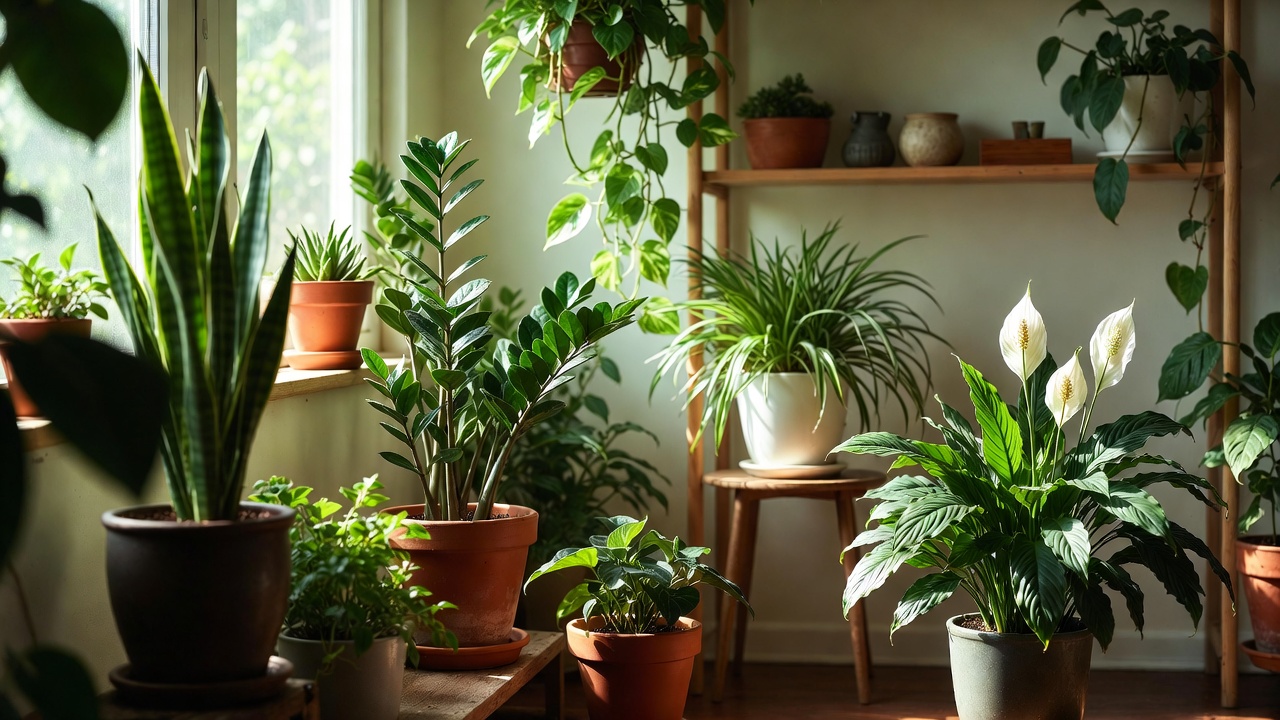
1. Snake Plant (Sansevieria)
- Extremely resilient, tolerates low light.
- Requires water only every 2–3 weeks.
- Air-purifying and slow-growing.
2. ZZ Plant (Zamioculcas zamiifolia)
- Survives neglect, low light, and irregular watering.
- Glossy leaves add visual appeal.
- Excellent for offices and dim rooms.
3. Pothos (Epipremnum aureum)
- Thrives in low to bright indirect light.
- Can grow in soil or water.
- Very forgiving of irregular watering.
4. Spider Plant (Chlorophytum comosum)
- Hardy and easy to propagate via “pups”.
- Prefers bright indirect light but tolerates shade.
- Minimal fertilization needed.
5. Peace Lily (Spathiphyllum)
- Tolerates low light and moderate watering.
- Blooms with white flowers periodically.
- Helps improve indoor air quality.
6. Cast-Iron Plant (Aspidistra elatior)
- Name reflects its toughness.
- Survives low light, drought, and neglect.
7. Rubber Plant (Ficus elastica)
- Can grow in moderate light.
- Slow-growing and requires occasional watering.
- Glossy, attractive leaves.
8. Succulents and Cacti (Aloe, Echeveria, Haworthia)
- Store water in leaves, extremely drought-tolerant.
- Require bright indirect sunlight.
- Minimal fertilization during growing season.
9. Dracaena
- Varieties include Dracaena marginata and Dracaena fragrans.
- Tolerates low to moderate light.
- Water only when soil dries out.
10. Philodendron
- Thrives in indirect light.
- Water every 1–2 weeks, depending on conditions.
- Low-maintenance and decorative.
Step 4: Soil and Container Tips
- Use well-draining potting soil for all indoor plants.
- Succulents and cacti require special sandy soil mix.
- Ensure pots have drainage holes to prevent root rot.
- Add gravel or small stones at the bottom for better drainage if needed.
Step 5: Watering Strategies for Minimal Care
- Most low-maintenance plants thrive on infrequent, deep watering.
- Water only when top inch of soil is dry.
- Avoid overwatering – it’s the most common cause of indoor plant death.
- Use self-watering pots for extra convenience.
Step 6: Light Requirements
- Low light: Snake plant, ZZ plant, Cast-iron plant.
- Moderate light: Spider plant, Peace lily, Rubber plant.
- Bright indirect light: Pothos, Dracaena, Succulents, Philodendron.
- Avoid direct sunlight for shade-tolerant species; it can burn leaves.
Step 7: Fertilization
- Minimal fertilization needed; feed once or twice per year for slow growers.
- Use diluted indoor plant fertilizer during active growing season.
- Succulents require light fertilization in spring and summer only.
Step 8: Pruning and Maintenance
- Remove dead leaves regularly to maintain plant health.
- Trim leggy growth if needed, but most plants tolerate neglect.
- Wipe leaves with a damp cloth to remove dust and improve photosynthesis.
- Propagate easy-care plants like Pothos and Spider plants for additional greenery.
Step 9: Pest and Disease Management
- Low-maintenance plants are generally pest-resistant.
- Common pests: spider mites, mealybugs, and scale.
- Use organic treatments such as neem oil or insecticidal soap.
- Ensure proper airflow and avoid overwatering to prevent fungal issues.
Step 10: Seasonal Care
- Winter: Reduce watering; many plants enter dormancy.
- Summer: Increase watering slightly and rotate plants for even light exposure.
- Check soil moisture regularly and adjust according to indoor climate.
- Clean leaves periodically to remove dust and improve growth.
Step 11: Container Gardening Tips for Minimal Care
- Choose lightweight containers for easy movement.
- Use self-watering pots for very low-maintenance care.
- Group plants with similar light and water needs.
- Elevate pots slightly to improve airflow and drainage.
Step 12: Frequently Asked Questions
Q1: Can indoor plants survive complete neglect?
- Some, like Snake plants and ZZ plants, can survive weeks without water.
Q2: Which indoor plants require the least watering?
- Succulents, Cacti, ZZ plant, and Cast-Iron plant.
Q3: Can low-light indoor plants bloom?
- Some, like Peace Lily, will flower even in low-light conditions.
Q4: Do these plants improve air quality?
- Many, including Snake Plant, Pothos, and Peace Lily, filter toxins and improve air.
Q5: How often should I repot minimal-care plants?
- Every 2–3 years or when roots outgrow the container.
Step 13: Final Thoughts
Choosing indoor plants that survive with minimal care allows you to enjoy a vibrant home without stress:
- Focus on resilient, slow-growing, and low-water plants.
- Use well-draining soil and proper containers.
- Water sparingly and provide appropriate light.
- Minimal pruning, occasional fertilization, and periodic cleaning keep plants healthy.
With these strategies, your indoor garden can thrive year-round with minimal effort, making it ideal for busy lifestyles and beginners alike.