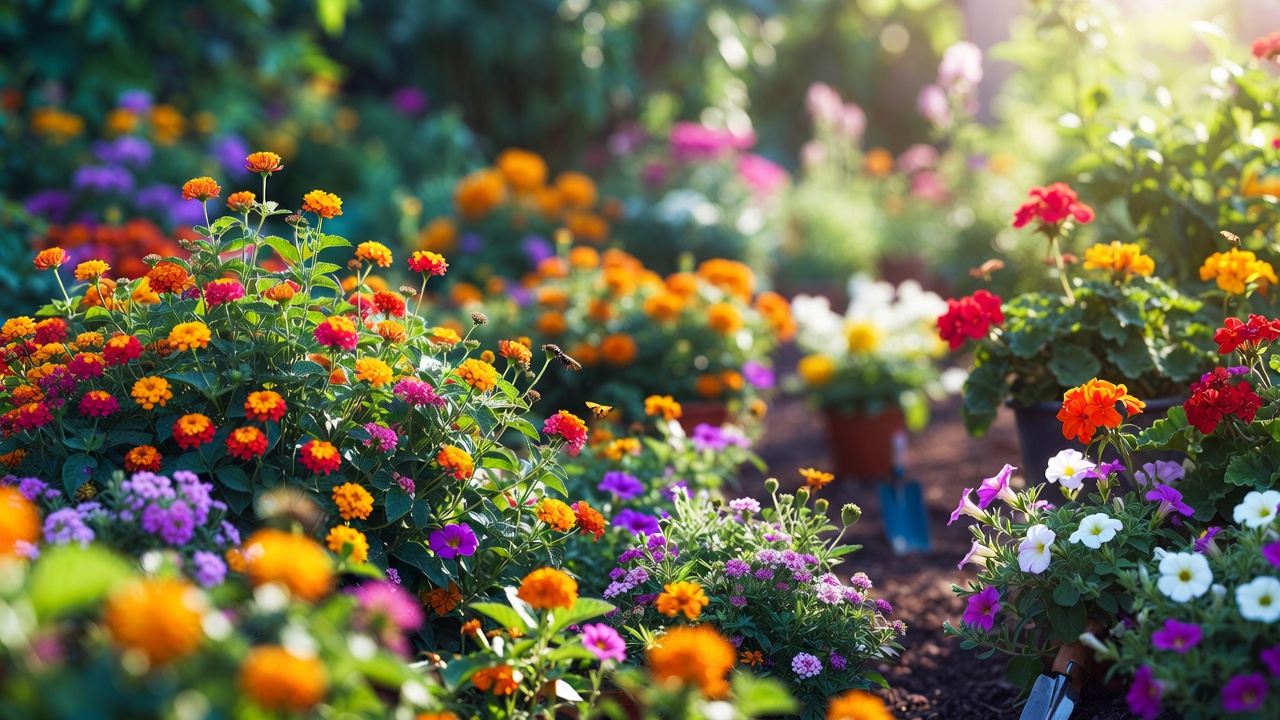
Adding flowers that bloom all year without constant attention is the dream of every gardener. By choosing the right low-maintenance flowers, you can enjoy vibrant colors, attract pollinators, and create a visually stunning garden throughout all seasons.
This guide covers easy-care flowers that bloom year-round, tips on planting, soil, watering, and maintenance, helping gardeners maximize beauty with minimal effort.
Step 1: Understanding Low-Maintenance Flowers
Low-maintenance flowers require:
-
Minimal watering
-
Resistance to pests and disease
-
Adaptability to a range of soil types
-
Long bloom periods or successive flowering cycles
Benefits:
-
Save time and effort
-
Reduce the need for chemical fertilizers or pesticides
-
Maintain a garden that’s visually appealing all year
Step 2: Best Perennials for Year-Round Bloom
1. Lantana
-
Bright clusters of flowers in reds, oranges, pinks, and yellows.
-
Tolerates heat and drought.
-
Attracts butterflies and pollinators.
2. Marigolds
-
Easy to grow in sun or partial shade.
-
Repels some garden pests naturally.
-
Continuous blooms with minimal care.
3. Geraniums
-
Versatile for garden beds, borders, and pots.
-
Heat-tolerant, blooms persist with deadheading.
4. Petunias
-
Available in vibrant colors and patterns.
-
Thrives in sunny spots with moderate watering.
5. Calendula
-
Hardy, drought-tolerant, and pest-resistant.
-
Edible flowers for salads or tea.
Step 3: Low-Maintenance Bulbs and Seasonal Flowers
-
Daffodils: Bloom early spring, minimal care, deer-resistant.
-
Tulips: Plant in fall for spring color, naturalize easily.
-
Alliums: Architectural blooms that require little attention.
-
Crocus: Early bloomers that self-seed naturally.
Step 4: Groundcovers That Flower All Year
-
Ajuga: Purple flower spikes, spreads easily, low upkeep.
-
Creeping Thyme: Tiny blooms attract bees, tolerates drought.
-
Sedum (Stonecrop): Hardy, succulent leaves, late summer blooms.
Step 5: Flowers for Containers and Small Spaces
-
Begonias: Shade-tolerant, continuous flowering with minimal watering.
-
Impatiens: Vibrant blooms in partial shade, easy care.
-
Pansies: Colorful, frost-tolerant, ideal for balcony pots.
Step 6: Flowering Shrubs That Require Little Maintenance
-
Hydrangea (certain varieties): Large blooms, minimal fertilization.
-
Azaleas: Evergreen varieties bloom multiple seasons.
-
Camellias: Winter-blooming flowers with glossy leaves.
Step 7: Tips for Year-Round Flowering
-
Select staggered bloom periods: Combine early, mid, and late bloomers.
-
Use perennials with long flowering cycles: Reduces need for replanting.
-
Deadhead regularly: Remove faded blooms to encourage new flowers.
-
Provide good drainage: Prevent root rot in low-maintenance plants.
-
Mulch: Retains moisture and reduces weeds.
Step 8: Soil and Fertilization Tips
-
Use well-draining soil mixed with compost.
-
Apply slow-release organic fertilizer during peak growth periods.
-
Avoid over-fertilizing to prevent weak, leggy growth.
Step 9: Watering and Sunlight Requirements
-
Most low-maintenance flowers thrive in full sun or partial shade.
-
Water deeply but infrequently to promote strong roots.
-
Group plants with similar water needs together for efficiency.
Step 10: Pest and Disease Management
-
Plant resistant varieties to reduce chemical use.
-
Encourage beneficial insects like ladybugs and bees.
-
Remove diseased leaves promptly.
-
Companion plant with herbs like basil or thyme to naturally repel pests.
Step 11: Container and Balcony Gardening Tips
-
Choose compact, low-maintenance plants like geraniums, begonias, petunias.
-
Ensure adequate drainage and use self-watering pots if possible.
-
Rotate or replace plants seasonally to maintain year-round color.
Step 12: Low-Maintenance Climbers and Vines
-
Bougainvillea: Drought-tolerant, vibrant blooms, minimal pruning.
-
Honeysuckle: Attracts pollinators, grows well on trellises.
-
Climbing roses (shrubs): Long-lasting blooms with proper support.
Step 13: Eco-Friendly Flower Gardening Practices
-
Use organic mulch and compost.
-
Avoid chemical fertilizers and pesticides.
-
Choose native or adapted plants for your climate.
-
Encourage wildlife and pollinators for a self-sustaining ecosystem.
Step 14: Seasonal Flowering Combinations
-
Spring: Daffodils, tulips, crocus
-
Summer: Lantana, marigolds, geraniums, petunias
-
Autumn: Chrysanthemums, sedum
-
Winter: Camellias, pansies, cyclamen
Step 15: Frequently Asked Questions
Q1: Can I have flowers blooming all year in any climate?
-
Yes, but select plants suited for your USDA zone or local climate. Use containers or greenhouses if needed.
Q2: How often should I water low-maintenance flowers?
-
Typically 1–2 times per week; adjust depending on rainfall and soil type.
Q3: Do low-maintenance flowers require fertilizer?
-
Minimal fertilizer is needed; slow-release organic types are best.
Q4: Can I mix perennials and annuals for continuous bloom?
-
Yes, combining them ensures year-round color while keeping maintenance low.
Q5: Are these flowers deer- or pest-resistant?
-
Many low-maintenance perennials like marigolds, lantana, and sedum are naturally pest-resistant.
Step 16: Final Thoughts
Creating a garden with low-maintenance flowers that bloom all year is possible with careful planning:
-
Choose perennials and resilient annuals with long bloom periods.
-
Ensure good soil, watering practices, and sunlight exposure.
-
Use mulch, compost, and companion planting to reduce maintenance.
-
Incorporate shrubs, climbers, and container plants for variety and year-round color.
By selecting the right flowers and applying minimal but effective care, you can enjoy a vibrant, colorful garden throughout every season without constant effort.