Proper watering is one of the most critical factors for a thriving vegetable garden. Overwatering or underwatering can stunt growth, reduce yields, and even kill plants. Understanding when and how to water your vegetable garden ensures healthy plants, higher productivity, and efficient water use.
This comprehensive guide covers watering schedules, techniques, seasonal adjustments, and expert tips, specifically designed to help gardeners of all levels succeed.
Why Proper Watering Matters
-
Prevents plant stress – Consistent water supports growth and nutrient uptake.
-
Reduces disease risk – Proper watering avoids fungal infections and root rot.
-
Maximizes yields – Well-hydrated plants produce more flowers, fruits, and leaves.
-
Conserves water – Efficient watering reduces waste and lowers your water bill.
-
Encourages strong root systems – Deep watering promotes deep root growth.
Step 1: Understand Plant Water Requirements
Different vegetables require different amounts of water:
| Vegetable Type | Water Needs per Week (inches) | Notes |
|---|---|---|
| Leafy greens | 1–1.5 | Shallow roots, frequent watering |
| Tomatoes & Peppers | 1.5–2 | Deep roots, consistent moisture |
| Root crops | 1–1.5 | Avoid waterlogging for tubers |
| Cucumbers & Squash | 1.5–2 | High water needs, mulch helps |
| Herbs | 0.5–1 | Drought-tolerant, light watering |
Step 2: Determine When to Water
Morning Watering (Best Time)
-
Reduces evaporation
-
Leaves dry by evening, preventing fungal growth
-
Plants absorb water efficiently for daytime photosynthesis
Avoid Evening Watering
-
Wet leaves overnight → higher risk of fungal diseases
-
Cooler temperatures reduce water absorption
Midday Watering (If Necessary)
-
Only in very hot weather
-
Use deep, slow watering to prevent evaporation
Step 3: How to Water Effectively
1. Deep Watering
-
Water at the soil level to reach roots
-
Encourage deep root growth for drought resistance
-
Avoid frequent shallow watering, which leads to weak roots
2. Drip Irrigation
-
Delivers water directly to plant base
-
Reduces water waste and leaf wetting
-
Can be automated with timers
3. Soaker Hoses
-
Even water distribution along garden rows
-
Ideal for raised beds or long vegetable rows
-
Keeps foliage dry and reduces disease
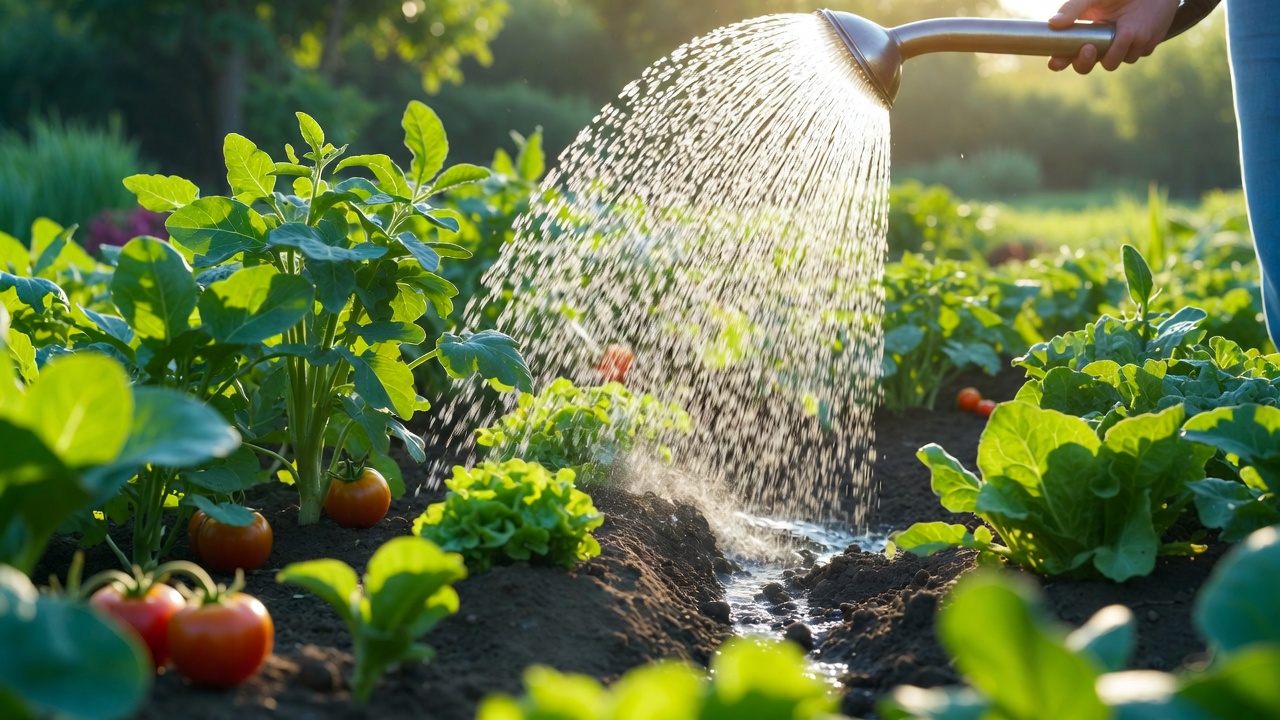
4. Hand Watering
-
Best for small gardens or containers
-
Use a watering can or hose with gentle spray
-
Target soil, not leaves, for efficiency
Step 4: Mulching to Retain Moisture
-
Organic mulches: straw, shredded leaves, wood chips
-
Reduces evaporation, keeps roots cool, and prevents weeds
-
2–3 inch layer around base of plants recommended
Step 5: Adjust Watering for Growth Stage
| Growth Stage | Watering Tips |
|---|---|
| Seedlings | Light, frequent watering to keep soil moist |
| Establishing Plants | Deep watering every 2–3 days |
| Fruiting/Flowering | Consistent, deep watering 2–3 times/week |
| Mature Plants | Reduce frequency, water deeply to encourage root growth |
Step 6: Signs of Underwatering
-
Wilting leaves
-
Dry, cracked soil
-
Slow growth or yellowing leaves
-
Leaf curling
Solution
-
Increase watering frequency
-
Mulch soil to retain moisture
-
Deep soak roots instead of light sprinkling
Step 7: Signs of Overwatering
-
Soggy soil or puddles
-
Yellowing leaves or root rot
-
Fungus gnats or mold
-
Slow growth due to oxygen-starved roots
Solution
-
Improve drainage with raised beds or soil amendment
-
Water less frequently
-
Check for clogged irrigation lines
Step 8: Soil Considerations
-
Sandy soil: drains quickly → needs more frequent watering
-
Clay soil: retains water → less frequent watering
-
Loamy soil: ideal balance → water moderately
-
Test soil moisture by finger test (2–3 inches deep)
Step 9: Seasonal Watering Adjustments
-
Spring: Moderate watering; frequent rains may reduce need
-
Summer: Increase frequency and deep watering; mulch essential
-
Fall: Reduce watering gradually as plants mature
-
Winter: Minimal watering for dormant crops; avoid frost-damaged roots
Step 10: Container Gardening Watering
-
Containers dry faster than ground soil
-
Use self-watering pots or drip systems for efficiency
-
Monitor moisture daily during hot weather
-
Lightweight soil mixes with good drainage improve water retention
Step 11: Rainwater Harvesting
-
Collect rainwater for garden irrigation
-
Reduces tap water use
-
Allows gentle, natural watering with less chlorine
-
Combine with drip or soaker hoses for efficiency
Step 12: Watering Tools and Techniques
-
Watering cans – Best for small gardens and seedlings
-
Hoses with spray nozzles – Adjustable flow for deep watering
-
Drip irrigation/timers – Efficient for large or busy gardens
-
Soil moisture meters – Prevents over- or under-watering
Step 13: Common Mistakes to Avoid
-
Watering leaves instead of soil → disease risk
-
Frequent shallow watering → weak roots
-
Ignoring soil type → overwatering clay, underwatering sand
-
Watering at wrong times → morning recommended
-
Not adjusting for seasonal changes
Step 14: Frequently Asked Questions
Q1: How often should I water vegetables?
-
Depends on soil, plant type, weather; generally 1–2 inches per week, deep watering.
Q2: Can I water at night?
-
Not recommended; wet leaves overnight increase fungal disease risk.
Q3: Should I water daily?
-
Only for seedlings or sandy soil in hot weather; otherwise deep watering 2–3 times/week is better.
Q4: How do I know if my soil is dry?
-
Use the finger test 2–3 inches deep; soil should feel moist, not soggy or dry.
Q5: Can I use recycled water?
-
Yes, if safe and low in salts; avoid water with chemicals harmful to plants.
Step 15: Expert Tips for Maximum Efficiency
-
Water early in the morning for best absorption
-
Use mulches to reduce evaporation
-
Deep soak to encourage strong root systems
-
Rotate watering methods (hose, drip, can) to prevent soil compaction
-
Monitor weather patterns and adjust schedule accordingly
Final Thoughts
Proper watering is essential for a thriving vegetable garden. By understanding:
-
Plant-specific water needs
-
Best times to water (morning preferred)
-
Techniques like deep watering, drip irrigation, or hand watering
-
Soil types and seasonal adjustments
You can ensure healthier plants, higher yields, and sustainable water use. Efficient watering not only saves resources but also creates a resilient and productive vegetable garden for any gardener, from beginners to experienced growers.